
Choosing syrup clarification equipment in 2026 requires more than comparing catalog prices. Syrup viscosity, Brix level, color, solids load, and production volume can change the best choice. A small beverage plant may prefer cartridge or bag filters. A high-volume facility may need a filter press, centrifuge, or multi-stage clarification line.
This guide reviews the leading syrup clarification equipment types for buyers. It considers filtration accuracy, flow stability, cleanability, product loss, energy use, and maintenance demands. Sanitary stainless-steel construction matters, especially around valves, seals, and transfer lines. These details affect cleaning time and contamination control.
Real operating conditions should guide every decision. A filter that performs well with warm, low-viscosity syrup may struggle with concentrated syrup. Temperature can improve flow, but excessive heat may affect color or flavor. That trade-off deserves testing. Small pilot trials often reveal problems that brochures hide.
There is no universal winner. Not even close. Equipment selection should include supplier documentation, performance records, service support, and replacement-part availability. Buyers should request flow-rate data under comparable conditions. They should also examine cleaning procedures and expected filter-media consumption.
Some recommendations may remain imperfect because each syrup formulation behaves differently. That is not a weakness in the evaluation. It is a practical limitation. The strongest purchasing decision combines technical specifications, operator experience, and verified trial results. This 2026 overview helps buyers compare options with clearer expectations and fewer expensive surprises.
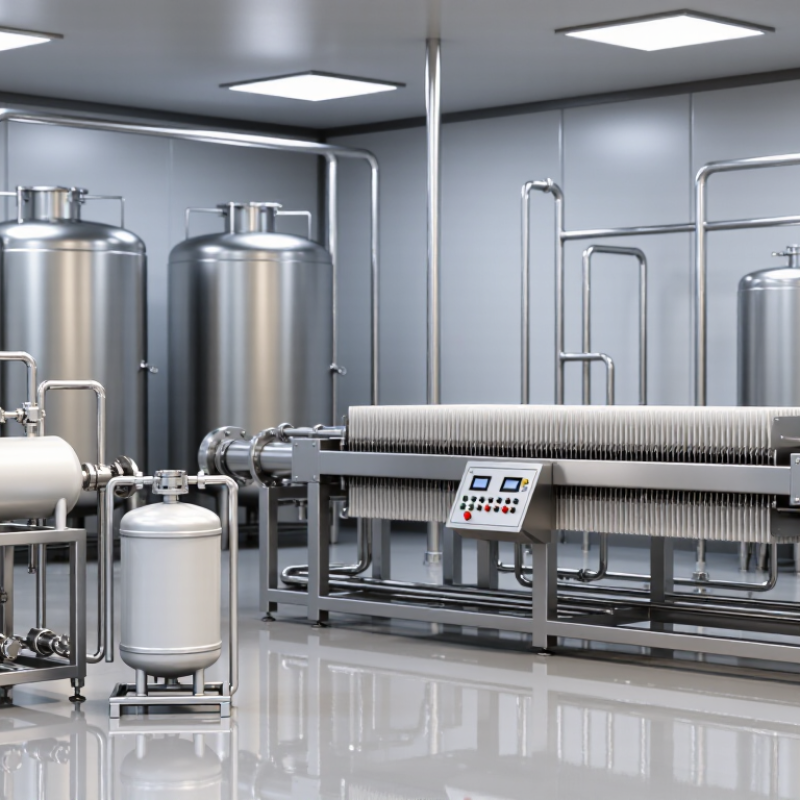
Choosing syrup clarification equipment starts with buyer specifications, not machine appearance. A clear vessel does not guarantee clear syrup. Define the filtration range first, from 0.2 to 1.0 µm, based on particle size and product sensitivity. Finer media can improve clarity, but may reduce flow and increase pressure. Measure twice.
NTU gives buyers a practical turbidity target for acceptance testing. Set the limit after checking color, flavor, viscosity, and storage conditions. A low NTU result is useful, yet it cannot replace sensory evaluation. Track yield as well. Excessive filter retention may remove valuable syrup solids. This hidden loss can outweigh the benefit of brighter appearance. Flow rate must be recorded at operating temperature, not only with water in a laboratory.
Depth filters suit heavier particle loads, while cartridge or membrane systems support tighter clarification. Some lines may need staged filtration instead of one extremely fine element. In field trials, pressure rise often reveals more than an impressive initial result. Keep records for inlet NTU, outlet NTU, pressure, temperature, batch volume, and cleaning time. I would avoid promising a fixed capacity before testing the actual syrup. Viscosity changes with temperature, concentration, and batch age. That makes catalog figures only a starting point. A pilot run can expose weaknesses early, although pilot results still require production-scale confirmation.
In 2026, syrup clarification equipment buyers are paying closer attention to strainer screen size. For coarse syrup solids, a 50–500 µm range offers practical control without overcomplicating the process. A 500 µm screen can capture fibers, crystallized particles, and larger debris before pumping. It usually handles higher flow with lower pressure loss. That matters during busy production hours.
Smaller screens, such as 100 or 50 µm, remove finer particles and create a cleaner visual appearance. However, they can blind quickly when syrup contains suspended pulp or irregular crystals. Operators should check the screen every shift, especially after cleaning tanks or changing raw materials. A pressure gauge before and after the strainer helps reveal restriction early. Small details matter.
Screen selection is not only about filtration accuracy. Syrup temperature, viscosity, flow rate, and cleaning access all influence performance. A 250 µm screen may provide a useful middle ground for many coarse-solids applications. Still, that assumption needs testing. I have seen a screen perform well in warm syrup but struggle after a short cooling period. Buyers should request trial data using their actual syrup, not water. A clear housing can also expose uneven loading, although it may require more careful maintenance.
2026 Top Syrup Clarification Equipment Types for Buyers
Centrifugal clarifiers are practical for high-solids syrups containing fine crystals, pulp, or suspended mineral particles. Operating between 2,000 and 4,000 ×g can separate particles faster than gravity settling. This range often suits concentrated liquids with demanding production schedules. However, higher force does not automatically produce clearer syrup. Feed viscosity, particle size, temperature, and solids loading strongly influence results. A syrup that looks clean at the inlet may still leave haze after cooling.
In plant trials, operators should record turbidity before and after clarification. They should also measure flow rate, discharge frequency, and product loss. A properly selected bowl design can maintain stable clarification without excessive shear. Continuous solids removal helps prevent sudden pressure changes and uneven separation. Yet, I would not specify equipment from force alone. Some high-solids syrups need preheating, dilution, or staged clarification. This adds cost and may affect color or flavor. Trial data remains more reliable than catalogue performance claims.
Tips: Test representative syrup, including its worst solids load. Check clarity after 24 hours, not only immediately. Keep temperature consistent during testing. Inspect seals, discharge ports, and cleanability before purchase. A small pilot run can expose problems early. Mistakes happen.
| Equipment Type | Separation Principle | Typical Feed Condition | Indicative Operating Range | Strengths | Limitations | Buyer Evaluation Priorities |
|---|---|---|---|---|---|---|
| Centrifugal Clarifier | Accelerated sedimentation using centrifugal force; suspended particles move toward the bowl wall while clarified syrup exits continuously. | High-solids syrup containing fine insoluble particles, colloids, or crystallization debris. | Relative centrifugal force: 2,000–4,000 ×g Typical temperature: approximately 70–95°C, subject to syrup properties and process design. | Compact footprint, continuous operation, rapid clarification, and effective removal of dense suspended solids. | Higher capital and maintenance requirements; performance depends on viscosity, temperature, particle size, and feed consistency. | Clarification efficiency, solids discharge method, hygienic design, bowl capacity, shear exposure, temperature control, and clean-in-place capability. |
| Gravity Settling Tank | Natural sedimentation under gravity in a quiescent vessel. | Low- to moderate-solids syrup with relatively large and dense particles. | Residence time commonly measured in tens of minutes to several hours; performance varies significantly with viscosity and particle size. | Simple construction, low energy demand, and easy visual inspection. | Large footprint, slow response to process changes, and limited removal of fine particles. | Tank volume, residence-time distribution, thermal insulation, sludge removal, hygienic drainability, and risk of product degradation during long holding periods. |
| Hydrocyclone | Uses pressure-driven swirling flow to separate particles by density and size. | Continuous liquid streams with relatively coarse, dense suspended particles. | Common pressure drop: approximately 0.5–2.5 bar, depending on geometry and process duty. | No moving parts, compact design, and continuous operation. | Less effective for very fine particles, low-density solids, or highly viscous syrups; pressure demand can be substantial. | Particle-size distribution, pressure drop, erosion resistance, underflow handling, and compatibility with the syrup’s viscosity. |
| Pressure Leaf Filter | Liquid passes through filter leaves coated with a filter-aid or retained solids cake. | Moderate-solids syrup requiring fine polishing after primary clarification. | Filtration rating is commonly selected from approximately 1–20 µm, depending on the filter medium and product target. | Good fine-particle removal, enclosed operation, and high clarity when properly operated. | Requires cake formation, cleaning, filter-aid management, and periodic shutdown or regeneration. | Filter area, pressure rating, cake discharge, filter-aid compatibility, product recovery, and validated cleaning procedures. |
| Cartridge or Bag Filter | Depth or surface filtration through replaceable porous media. | Low- to moderate-solids syrup used for final polishing or protection of downstream equipment. | Nominal or absolute ratings commonly range from approximately 1–50 µm, depending on media selection. | Easy installation, modular capacity, and straightforward final-stage filtration. | Rapid pressure rise with high solids loading; consumable replacement can increase operating cost. | Filter rating, differential-pressure monitoring, housing drainability, seal materials, changeout frequency, and product hold-up volume. |
| Rotary Vacuum Drum Filter | Continuous vacuum-driven filtration through a rotating porous drum, generally with a solids cake. | Slurries or syrups with a substantial, filterable solids load. | Continuous operation; practical capacity depends on cake permeability, vacuum level, drum area, and syrup viscosity. | Continuous solids removal and suitability for relatively high solids loading. | Large equipment footprint, exposed moving surfaces, and less suitable for very fine or compressible solids without conditioning. | Vacuum stability, cake discharge, wash-water control, hygienic enclosure, belt or cloth selection, and product-loss minimization. |
| Membrane Microfiltration | Pressure-driven separation through microporous membranes. | Low-solids syrup requiring fine clarification and consistent particle reduction. | Membrane pore sizes commonly range from approximately 0.1–1.0 µm; operating pressure is system-specific. | High and repeatable clarification performance with limited chemical use. | Membrane fouling, cleaning requirements, flux decline, and possible product loss in the retentate. | Flux rate, transmembrane pressure, membrane compatibility, clean-in-place chemistry, concentration polarization, and recovery yield. |
| Decanter-Type Centrifuge | Continuous centrifugal separation using a rotating bowl and internal conveying screw. | Higher-solids slurries where continuous dewatering or concentrated solids discharge is required. | Common relative centrifugal force: approximately 1,500–4,000 ×g, depending on bowl speed and diameter. | Continuous solids discharge, robust handling of higher solids loads, and reduced manual intervention. | Can expose syrup to greater shear; generally more complex and may provide less polishing clarity than a dedicated clarifier. | Solids concentration, differential speed, torque capacity, wear protection, product recovery, vibration control, and hygienic accessibility. |
| Technical note: The operating ranges shown are indicative engineering ranges rather than guaranteed performance values. Actual results depend on syrup viscosity, temperature, density difference, particle-size distribution, solids concentration, feed rate, equipment geometry, and hygienic process requirements. Pilot testing or validated process trials are recommended before final equipment selection. | ||||||
For buyers comparing syrup clarification equipment in 2026, selection depends on particle load, viscosity, and pressure stability. Depth filters work well when syrup carries suspended solids or fine crystals. Their layered media captures contaminants throughout the matrix, not only on the surface. This can increase loading capacity, but fouling may become harder to see. Cartridge filters provide a more defined barrier. They suit final polishing when upstream syrup is reasonably clean. Start with the process, not the catalog. Good advice.
A 1–10 µm rating should be treated as a process setting, not a guaranteed outlet result. Nominal ratings may allow more particle passage than absolute ratings. Ask how each rating was tested and under what fluid conditions. A practical train might use a coarser depth stage before a 5 µm cartridge. A 1 µm cartridge may follow when visual clarity or downstream protection demands tighter control. However, finer filtration can increase ΔP quickly in viscous syrup. Measure inlet and outlet pressure continuously. Set a changeout limit before flow collapses. Do not wait for a production upset.
Temperature changes matter. Colder syrup moves slowly and creates misleading pressure alarms. Record temperature beside ΔP during each batch. Operators should inspect housing seals, cartridge seating, and differential gauges at every changeout. Small bypass leaks can defeat an excellent filter. Test results also need context. One clean sample does not prove stable performance. Review turbidity, flow rate, pressure rise, and filter life together. Some specifications remain too optimistic. Pilot trials with actual syrup often reveal this. Use the trial to adjust depth, pore rating, and changeout timing.
Select depth and cartridge filters by nominal rating and differential-pressure control
Depth filters typically tolerate a higher pressure drop because particles are captured throughout the filter structure, while cartridge filters are often changed at a lower ΔP to protect flow rate and product quality. The values shown are representative engineering guidance for syrup clarification and should be confirmed through product-specific validation.
Membrane clarification systems deserve close attention when buyers compare syrup equipment. Microfiltration commonly uses 0.1–0.45 µm membranes to reduce suspended solids, haze, and selected microbial loads. Smaller pores can improve clarity, but they may reduce flow and increase pressure. A smaller pore is not automatically better.
In a plant trial, measure flux with the actual syrup, not only with water. Syrup temperature, sugar concentration, viscosity, and particle content can change performance sharply. Record transmembrane pressure, flow rate, product loss, and cleaning time. A 0.2 µm membrane may suit one formula, while a 0.45 µm option may protect capacity better. Pilot testing matters.
Hygiene is equally important. Look for 3-A hygienic design features, including smooth product-contact surfaces, fully drainable piping, sanitary seals, and minimal dead legs. Clean-in-place coverage should reach housings, valves, and return lines. Confirm the cleaning temperature, chemical compatibility, and membrane manufacturer’s operating limits. Ask for documented surface finishes and inspection records. Certification claims still require verification.
One practical concern is operator error. Incorrect venting can trap air and disturb filtration. Poor pre-screening can also create rapid fouling. I would not choose equipment from pore size alone. Review validation data, maintenance access, replacement procedures, and batch-to-batch consistency. Real syrup behaves less neatly than a specification sheet suggests.