
Produce Trays are becoming a strategic choice for growers, packers, retailers, and global produce buyers. The right tray must protect delicate fruit, support ventilation, and remain stable through cold storage and transport. A crushed berry punnet can mean product loss, customer complaints, and wasted logistics costs.
The scale of the challenge is significant. The FAO reports that 13.2% of global food is lost between harvest and retail. UNEP also estimates that 19% of food is wasted at retail, food service, and household levels. These figures make tray design more than a packaging decision. It becomes a supply-chain decision. Smithers’ research on sustainable packaging also identifies recyclable materials, lightweighting, and fiber-based formats as major industry directions through the decade.
Jean-Pierre Emond, a recognized produce-packaging researcher, has emphasized, “Packaging is an integral part of the cold chain.” That principle guides this 2026 overview. It explains how rPET, molded fiber, corrugated board, and recyclable polypropylene trays perform in real distribution conditions. It also considers stack strength, moisture resistance, airflow, visibility, and automated packing compatibility.
Not every “sustainable” tray performs equally well. A fiber tray may absorb moisture. A lightweight plastic tray may deform under stacking pressure. Claims can also become vague without testing. This is where buyers need evidence, not attractive slogans. The following guide compares leading Produce Trays by application, material, protection, cost, and end-of-life practicality for international purchasing decisions.
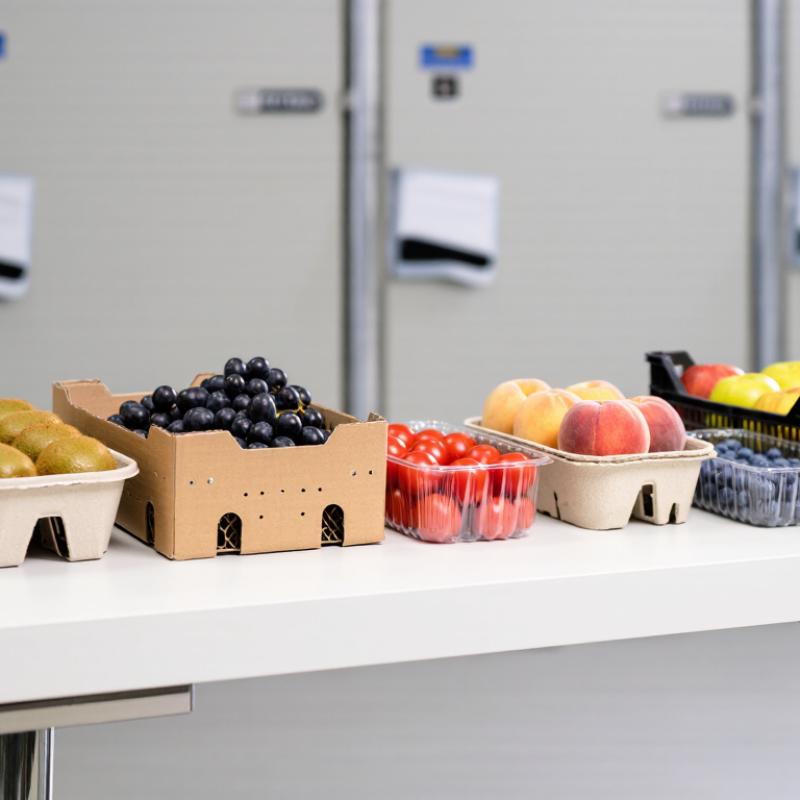
Produce trays are shallow containers designed to hold, protect, and move fresh fruits and vegetables. They may use molded fiber, recycled plastic, foam, or corrugated board. Each material changes ventilation, strength, moisture control, and cost.
In export handling, tray design affects more than appearance. A ventilated plastic tray can reduce heat around leafy greens during pallet storage. A rigid tray can prevent bruising when peaches travel through several loading points. Fiber trays suit buyers seeking lower plastic use, but moisture may weaken them during wet handling. Corrugated trays remain practical for mixed shipments because they are light and easy to label.
Produce trays also connect farms, cold stores, transporters, and retailers. Standard dimensions help workers stack pallets safely and use warehouse space efficiently. Open sides improve airflow, yet they can expose delicate produce to impact. Tight nesting saves return space, but cleaning requirements may become harder. From warehouse checks, small design details often create large losses. A tray that fits one pallet perfectly may waste space on another.
Temperature, humidity, product weight, and route length should guide selection. Buyers should request compression data, food-contact information, and cleaning instructions before purchase. Trial shipments reveal problems that samples cannot. Not every “reusable” tray performs well. That point deserves more attention.
Produce trays serve different supply chains, so global buyers should classify them by material, design, and application. Material affects strength, cost, moisture control, and recycling options. Molded pulp suits buyers seeking a fiber-based structure and natural cushioning. Plastic trays offer consistent dimensions and strong visibility. Reusable polymer trays can support repeated transport cycles. Verify food-contact requirements in the destination market.
Design determines how produce moves and sells. Vent holes help release field heat and reduce condensation around berries or leafy greens. Nestable trays save warehouse space when empty. Stackable designs need stable corners and even load distribution. Raised cells separate peaches, pears, or tomatoes during handling. Some trays include absorbent pads, although these may complicate sorting and disposal. Small details matter.
Application should guide the final selection. Berry trays need shallow cavities, airflow, and clear product visibility. Citrus trays require stronger walls and compression resistance. Export shipments may need reinforced edges for long pallet journeys. Retail-ready trays prioritize appearance and easy shelf placement. Farm-to-market deliveries may favor washable, reusable formats. No tray is perfect. We sometimes choose the lightest option and overlook damage rates. A practical trial should measure product bruising, stacking behavior, cooling speed, and handling time across several shipments. Cost should include waste, labor, and rejected produce—not only the purchase price.
Choosing produce trays by crop is more reliable than choosing them by appearance. Berries need shallow, rigid trays with ventilation holes. These openings reduce condensation and help protect delicate fruit during cold-chain handling. Grapes and cherry tomatoes suit stackable PET or rPET trays with strong corners. Their clear walls support inspection without repeated handling. Mushrooms often need moisture-tolerant fiber or paperboard trays with breathable covers. However, wet storage can weaken some fiber designs.
Leafy greens require wider trays with airflow channels and enough depth to prevent crushing. Peaches, plums, and avocados need cushioned trays with separated pockets. These pockets limit bruising when cartons move through distribution centers. FAO reports that 13.2% of food is lost between harvest and retail globally. Better tray fit can reduce part of that loss, although packaging cannot solve poor temperature control. The 2024 UNEP Food Waste Index estimated 1.05 billion tonnes of food waste in 2022. That figure makes small handling improvements commercially important.
Tips: Test trays with real produce, not empty samples. Check compression, drainage, ventilation, and stacking after 24 hours. A recyclable tray may still fail if it causes bruising or excessive condensation. My practical concern is simple: lighter designs are attractive, but some become unstable under humid conditions. Buyers should compare whole-system performance, including pallet efficiency, cooling speed, and return damage. No tray wins everywhere.
| Produce Tray Type | Best-Suited Fruits and Vegetables | Typical Material | Ventilation | Protection Level | Moisture Handling | Main Advantages | Key Buying Considerations |
|---|---|---|---|---|---|---|---|
| Molded Pulp Tray | Apples, pears, peaches, nectarines, avocados, tomatoes | Molded recycled paper fiber | Medium to high, depending on hole design | Good cushioning against surface abrasion | Moderate; requires protection from prolonged saturation | Fiber-based, lightweight, nestable, and suitable for recyclable paper packaging systems | Fiber strength, pulp moisture resistance, nesting efficiency, and food-contact compliance |
| Corrugated Fiberboard Tray | Citrus, apples, pears, avocados, potatoes, onions, mixed produce | Fluted corrugated paperboard | Customizable from low to high | Good stacking and load-bearing performance | Moderate; coatings may improve resistance but affect recycling routes | Efficient for export cartons, printable, lightweight, and widely recyclable where facilities exist | Board grade, edge-crush strength, ventilation alignment, and cold-chain performance |
| Reusable Plastic Produce Tray | Apples, citrus, stone fruit, leafy greens, peppers, cucumbers | Food-grade polypropylene or high-density polyethylene | High when perforated | Very good impact, stacking, and repeated-use protection | High; washable and resistant to routine condensation | Durable, stackable, washable, and suitable for returnable supply chains | Pool management, reverse logistics, sanitation, tare weight, and cleaning validation |
| Vented Plastic Carry Tray | Tomatoes, peppers, eggplants, zucchini, berries in inner packs | Rigid food-grade plastic | High, with open sidewalls or base vents | Good for handling and short-distance transport | High, but produce still needs suitable humidity control | Easy hand handling, quick cooling, and convenient warehouse movement | Vent area, handle ergonomics, stack stability, and compatibility with pallet dimensions |
| Pulp or Paperboard Berry Punnet Tray | Strawberries, raspberries, blueberries, blackberries, cherries | Molded fiber or coated paperboard | Medium to high | Good separation and visibility when formed with individual cavities | Moderate; drainage and condensation control are important | Helps reduce crushing, supports retail presentation, and can use fiber-based construction | Drainage holes, cavity dimensions, airflow, compression resistance, and coating recyclability |
| Clear Rigid Clamshell Tray | Berries, grapes, cherry tomatoes, cut vegetables, specialty mushrooms | PET or recycled PET, where permitted and available | Controlled through ventilation openings | Very good visibility and protection from compression | High physical moisture resistance; condensation must be managed | Tamper visibility, retail-ready presentation, and product inspection without opening | Hinge durability, vent pattern, recycled-content rules, labeling, and local recycling infrastructure |
| Foam Protective Tray | Delicate peaches, nectarines, pears, mangoes, and premium stone fruit | Expanded or extruded polymer foam | Low to medium unless perforated | Excellent cushioning against bruising and vibration | High resistance to liquid absorption | Strong shock absorption and consistent cavity sizing | Destination-market restrictions, end-of-life options, ventilation, and pressure on soft fruit |
| Wooden Slatted Crate | Melons, pumpkins, potatoes, onions, citrus, and robust vegetables | Solid or lightweight treated wood | High through slatted sides | Good structural strength for heavy produce | Variable; wood can absorb moisture and requires proper drying | Strong ventilation, robust handling, and suitability for heavier loads | Wood treatment requirements, splinter control, dimensions, hygiene, and import regulations |
| Mesh or Net Produce Tray | Potatoes, onions, garlic, shallots, ginger, and dry root vegetables | Woven plastic mesh or rigid perforated polymer | Very high | Good airflow but limited cushioning for delicate produce | High airflow; not intended to retain liquid or high humidity | Supports drying, reduces condensation, and allows easy visual inspection | Mesh opening size, abrasion risk, load capacity, and compatibility with mechanical handling |
| Cellular Partition Tray | Apples, pears, citrus, kiwifruit, mangoes, and other individually handled fruit | Paperboard, molded pulp, or plastic sheet | Medium, based on cell and sidewall openings | Very good separation and reduced fruit-to-fruit contact | Depends on material and liner design | Reduces bruising, supports uniform presentation, and improves pack density | Cell diameter, fruit-size tolerance, compression strength, nesting, and packing labor |
Produce trays now range from PET and rPET to molded fiber, corrugated board, and foam alternatives. Each material solves a different handling problem. PET offers clear product visibility and strong moisture resistance. Molded fiber feels renewable, but humidity can weaken its edges. Corrugated trays are light and printable, yet stacking performance varies with ventilation holes.
Durability should be tested with filled-tray compression, vibration, drop, and cold-chain humidity trials. A tray that fails can waste more food than it saves in material. The UNEP Food Waste Index Report 2024 estimated 1.05 billion tonnes of food waste in 2022. That figure makes protection performance commercially important. Cost comparisons should include tooling, labor, freight volume, damage rates, and disposal fees. The cheapest unit price often hides expensive failure.
Safety requires documented food-contact testing, ink controls, odor checks, and migration assessment for the intended food. Recycled content must also meet applicable regional requirements. For sustainability, buyers should request verified recycled content, material-weight data, and end-of-life assumptions. The OECD Global Plastics Outlook reported that packaging represented about 40% of global plastic use in 2019. Compostable trays may sound ideal, but they need suitable collection and processing systems. Otherwise, the claim becomes mostly theoretical. I still find some supplier comparisons too neat; real farms expose weaknesses that laboratory tests miss. Pilot shipments remain necessary.
Produce trays may use molded fiber, corrugated board, or reusable plastic. Each type suits different handling conditions. Molded fiber absorbs some moisture but may weaken during long, humid shipments. Corrugated trays are light and printable, yet poor stacking can crush lower layers. Reusable plastic offers strength and ventilation, but return logistics can increase costs.
Check the tray’s internal dimensions against the actual produce size. Small gaps can cause bruising during vibration. Oversized cavities may let fruit roll and collide. Review compression strength, drainage, airflow, and temperature performance. Ask for test data from realistic transport trials, not only laboratory results. Food-contact requirements and recycling rules differ by destination, so request current compliance documents and material information. Traceable production records also support reliable quality control.
Tips: Test samples with real produce. Measure weight after cooling and loading. Inspect corners, vents, and base supports. Ask whether the tray remains stable when stacked while damp. A perfect-looking sample can still fail after days on a pallet. We have seen packaging choices change after one humid route. That is worth remembering. No checklist catches every farm condition. Leave room for seasonal differences, handling habits, and imperfect loading.