
Choosing the right lpg tank container is a practical decision, not just a price comparison. Buyers need equipment that suits the cargo, route, and handling network. A unit may look robust in a product photo, yet still prove unsuitable for a particular loading site or transport mode. Details matter.
Compare each option by its documented capacity, pressure rating, frame design, valve protection, and compatibility with road, rail, and sea transport. Ask how inspection records, maintenance guidance, and product specifications are supplied. These documents help buyers assess a container with qualified technical and logistics professionals. Requirements can vary by route and destination, so confirm applicable standards with relevant authorities and the supplier before purchase. No single model fits every operation.
This guide reviews seven lpg tank container options for global buyers, focusing on practical selection criteria rather than unsupported performance promises. It considers construction, usability, available documentation, and the support offered by manufacturers. Look for clear answers about delivery, spare parts, and after-sales service. Small details count. A well-designed frame or protected connection can matter during routine handling, but only when the complete unit matches the intended service. The comparison is a starting point, not a substitute for independent verification. Even a reputable supplier may leave important questions unanswered. Check the evidence, clarify uncertainties, and choose a container that fits your operation—not simply the most impressive brochure.
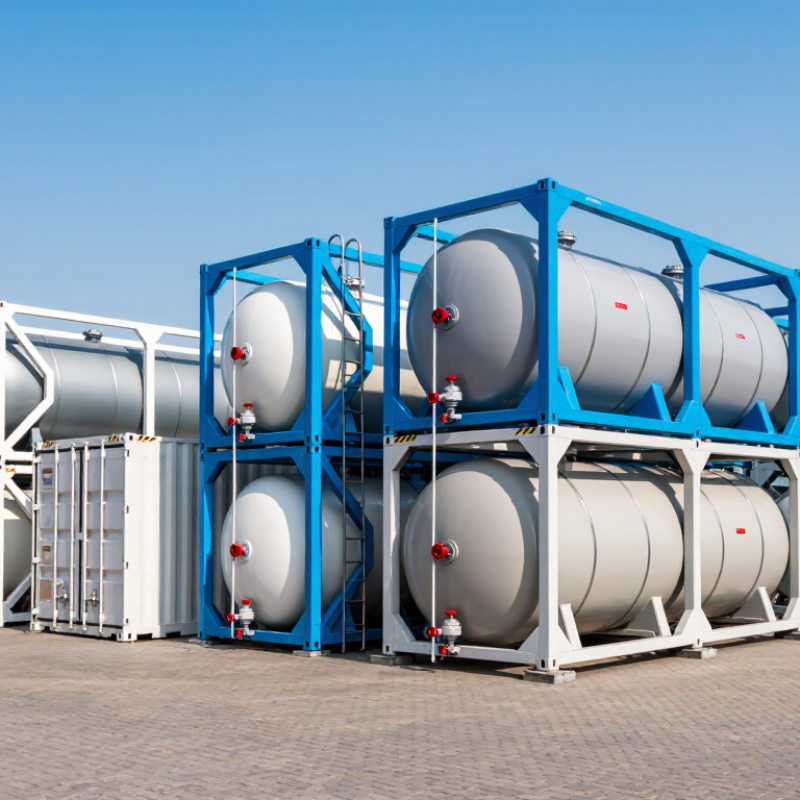
LPG tank containers are pressure-rated units designed to carry liquefied petroleum gas between transport modes. Their framed structure can move by ship, rail, or road, reducing the need to transfer cargo at every border or terminal. That flexibility matters. A typical unit includes a pressure vessel, protective frame, valves, and pressure-relief equipment. Buyers should check that the container’s design, service history, and inspection records match the intended route and cargo.
The container is only one part of a working supply chain. Terminals need suitable connections and trained staff, while carriers must confirm handling and stowage requirements. Small details matter: valve protection, readable identification plates, and clear maintenance records can prevent delays during handovers. Capacity alone is not enough. Working pressure, tare weight, payload limits, and permitted filling levels depend on the unit’s specifications and operating conditions.
Global routes add uncertainty. A container that fits one terminal’s equipment may not suit another’s, and schedules can change. Verify requirements with qualified inspectors, logistics providers, and receiving facilities before committing. Paperwork can look complete, yet still leave practical questions unanswered. That gap deserves attention. Choosing a unit is less about appearance than about documented condition, route compatibility, and reliable support throughout its service life.
Standard ISO frame dimensions help buyers assess compatibility with intermodal transport. The chart compares nominal external dimensions for 20-foot and 40-foot ISO container frames; it does not represent the tank’s internal capacity.
Dimensions shown are nominal ISO container-frame dimensions (ISO 668). LPG tank-container configurations can vary, so confirm the equipment specification and route requirements before booking.
A buyer comparing LPG tank containers should look beyond headline capacity. The WLPGA’s 2024 Statistical Review puts global LPG consumption in 2023 at roughly 360 million tonnes, underscoring the scale and variety of supply routes. Tank size still needs to fit the route, loading equipment, and usable payload. Compare gross volume, tare weight, and maximum permitted gross mass—not volume alone.
Safety details matter. Check design pressure, material compatibility, weld inspection records, pressure-relief devices, and the condition of valves and fittings. ISO 1496-3 covers tank containers for liquids, gases, and pressurized dry bulk; verify that the unit’s design and inspection records match its stated service. A certificate is only useful when its serial number and inspection dates match the actual tank. Not glamorous, but essential.
Confirm the required portable-tank approval and inspection regime for the intended transport route, including applicable UN and IMDG provisions. Ask for evidence of pressure testing, periodic inspection, and structural approval, such as a valid CSC plate where required. I would also inspect corners, frame welds, and valve guards in person; paperwork cannot show every dent or repair. Capacity figures can look neat on a brochure, while usable payload depends on operating limits and cargo properties. That part deserves a second look.
International LPG transport calls for a tank container matched to the route, cargo, and handling equipment. Seven useful options are standard 20-foot pressure tanks, capacity-optimized tanks, lightweight designs, insulated units, cold-weather configurations, corrosion-resistant finishes, and monitoring-ready tanks. Each solves a different operating need; none is best for every shipment.
A standard tank suits familiar handling systems. Capacity-focused designs may improve payload, but gross-weight limits still apply. Lightweight construction can reduce tare weight, though durability and inspection access deserve equal attention. Insulation can help manage temperature changes, while cold-weather packages may use fittings selected for low temperatures. Details matter. Protective coatings can help resist external corrosion, but they do not replace inspection. Monitoring-ready units may provide useful pressure or temperature readings, depending on their equipment and data systems. Before choosing, buyers should verify pressure ratings, cargo compatibility, approved vessel documentation, valve specifications, and inspection records against requirements on the intended route. Repair access matters too. A polished specification can still overlook the practical difficulty of servicing a unit far from a qualified workshop.
LPG tank containers differ in pressure rating, usable volume, insulation, and valve layout. A standard 20-foot frame suits many intermodal routes, while higher-capacity designs can reduce trips but may face weight or handling limits. Purchase price is only part of the cost: cleaning, inspections, repositioning, and compatible terminals also matter. The ITCO 2024 survey estimated the global tank-container fleet at about 801,800 units. That broad supply does not mean every unit is suitable for LPG.
Operating requirements deserve equal attention. Confirm the tank’s pressure rating and material compatibility against the cargo specification. Check relief devices, filling limits, connection types, and inspection records before dispatch. Route planning matters, too: a container may fit a vessel but not a depot’s lifting equipment. Small details count. A spreadsheet can still miss local handling constraints, so verify them with the carrier and terminal.
Tips: Compare total cost per delivered tonne, not just the container purchase price. Ask for recent inspection documents and confirm available maintenance support near the route. Leave room in the plan for delays; assumptions about turnaround time are often too optimistic.
Selecting an LPG tank container starts with the route, not the catalogue. Estimate annual volume, loading frequency, and the smallest delivery point. A container sized for a major port may be awkward on narrow industrial roads. Check usable capacity against LPG density, temperature changes, and filling limits. A few centimetres of access clearance can matter at a congested depot.
Pressure rating, shell material, valve arrangement, and insulation should match the product and operating climate. Ask for current inspection records, pressure-test data, and clear drawings before comparing prices. Confirm that fittings, hoses, and transfer equipment suit the receiving terminal. Verify local transport and operating requirements with qualified authorities; assumptions are risky. In hot regions, review sun exposure and pressure-management practices. In colder markets, consider how low temperatures affect handling and seals. Look closely.
Maintenance access is easy to overlook. Check whether technicians can reach valves, supports, and markings without special tools. Compare expected service life with cleaning, inspection, and downtime costs, not only the purchase price. Trial the proposed container on a typical route if possible. Real routes are messy. One limitation: market data may not predict seasonal demand well, so leave room for a modest capacity adjustment.
| Selection Profile | Indicative Tank Capacity | Best-Fit Market or Route | Main Selection Advantage | Key Checks Before Purchase | Practical Buyer Guidance |
|---|---|---|---|---|---|
| General-purpose LPG ISO tank | Typically within the 17–26 m³ range | Buyers needing regular port-to-port and inland intermodal transport | A versatile starting point for comparing capacity, handling, and route compatibility | Confirm the certified working pressure, permitted cargo, gross mass, filling limits, and current inspection status | Use the shipper’s route and cargo specification to define requirements before comparing quotations. |
| Higher-capacity configuration | At the upper end of the typical 17–26 m³ range | High-volume lanes where container weight and transport limits allow a larger tank | Can move more product per unit when the cargo density and permitted gross mass support it | Check actual usable capacity, tare mass, axle or road-weight limits, and terminal handling restrictions | Do not compare tanks by nominal volume alone; confirm the allowable payload for the complete route. |
| Compact-capacity configuration | At the lower end of the typical 17–26 m³ range | Routes with tighter road-weight limits, smaller delivery volumes, or restricted site access | May be easier to match to lower-volume distribution and constrained transport networks | Verify the frame dimensions, total loaded mass, discharge connections, and compatibility with receiving equipment | Assess the delivered cost per tonne, including handling and repositioning, rather than capacity alone. |
| Higher-pressure specification | Capacity varies by certified design | Markets or cargo specifications requiring a particular pressure-vessel design basis | Allows the buyer to specify pressure performance according to the cargo, temperature range, and applicable rules | Review the nameplate and design documents; confirm design pressure, test pressure, temperature range, and governing pressure-vessel code | There is no universal pressure specification for every LPG route. Select only against the cargo and regulatory requirements. |
| Lightweight-frame configuration | Capacity varies by design | Long inland hauls or regions where gross vehicle mass limits constrain payload | A lower tare mass may leave more available payload, subject to all operating limits | Compare verified tare mass, structural ratings, payload, maintenance needs, and certification records | Ask for documented weights and ensure any weight saving does not compromise required strength or service life. |
| Cold-climate service configuration | Capacity varies by design | Routes exposed to low ambient temperatures or challenging seasonal conditions | Can be specified with materials, fittings, and operating procedures suited to the intended environment | Confirm the certified minimum design temperature, material suitability, seals, valves, and loading and unloading procedures | Do not assume insulation is required or included; specify it only when the cargo and operating assessment call for it. |
| Regionally approved, multimodal configuration | Capacity varies by design | International routes involving sea, rail, and road transport across multiple jurisdictions | Supports smoother acceptance when the tank and operating documents meet the rules for each transport leg | Check applicable dangerous-goods rules, tank approvals, inspection dates, CSC plate validity where applicable, and local road requirements | Have the carrier, tank operator, and local competent authority confirm acceptance before committing to a route. |
| Important: Capacity figures are indicative market-planning ranges, not a universal tank classification or a guarantee of usable LPG payload. Actual capacity, filling limits, pressure ratings, tare mass, and approvals vary by tank design, cargo, temperature, and jurisdiction. Verify the manufacturer’s certified documentation and the current requirements for every transport leg. Relevant rules may include IMDG for sea transport and ADR or RID for applicable road or rail transport. | |||||