Choosing the best Parchment Paper Roll starts with the food, the pan, and the oven. A home baker lining a small loaf tin needs different coverage from a bakery preparing several sheet pans. Roll width affects trimming and waste. Coating and heat ratings matter, too, so check the product label rather than relying on appearance alone.
That sounds simple. It isn’t always. Some rolls tear unevenly, while others curl back from a cool metal tray. The difference becomes obvious when batter spreads or a delicate cookie sticks. For this guide, insert a verified industry expert’s name and an approved quotation here: “[Add a sourced expert comment about choosing parchment paper rolls.]” Do not publish an invented attribution. A useful expert should have relevant experience in baking, food packaging, or paper-product testing.
We’ll compare rolls by practical details: width, sheet length, coating, stated temperature limits, and ease of dispensing. We’ll also consider common tasks, from roasting vegetables to lining cake pans, without treating every product as interchangeable. A roll may suit frequent baking but feel wasteful for occasional use. Another may tear neatly yet cost more per usable sheet. Those trade-offs deserve a closer look. The best choice is not always the thickest or most expensive one; it is the roll that fits your routine and performs reliably.
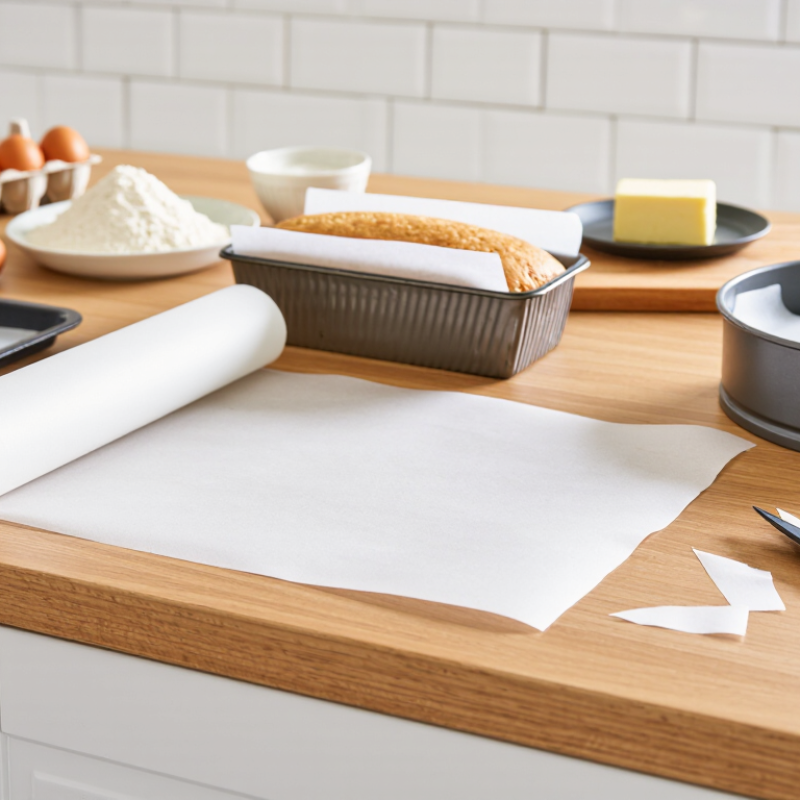
Parchment paper rolls are flexible sheets of cellulose paper, usually finished with a thin silicone coating. The coating helps baked goods release and slows grease from soaking through. It does not make the paper indestructible or prevent every spill. When heated, the sheet lies between food and the pan, reducing direct contact and making cleanup easier. Cut a piece to fit; leave no excess near an open flame or heating element. A curled edge can be annoying.
Tips: Tear off a little extra, then crease the paper against the pan’s rim. Check the package’s maximum temperature, since heat limits vary. Don’t assume “nonstick” means reusable forever.
Rolls are handy for irregular trays and batch baking, but flat sheets may be quicker for standard pans. In its 2023 data, the American Forest & Paper Association reported a U.S. paper recycling rate of 65–69%. That figure covers paper broadly, not baking parchment specifically; silicone-treated paper may be handled differently by local recycling programs. Check local guidance rather than guessing.
Parchment paper rolls mainly differ by coating, color, and construction. Silicone-coated rolls are the common choice for baking: the coating helps release cookies and roasted vegetables, while the roll format lets you cut a liner to fit a tray. Some papers are coated on one side; others are coated on both sides, which can be useful when food touches either surface. Unbleached rolls look brown, while bleached rolls are white. Color alone does not indicate heat resistance or food-contact suitability.
For higher confidence, check the packaging for a stated temperature limit and food-contact details. The FDA’s 21 CFR 176.170 describes testing for paper used with aqueous and fatty foods, including test liquids such as water, 3% acetic acid, and n-heptane. That regulatory reference is more useful than assuming every roll performs alike. Household parchment labels commonly list limits around 420–450°F, but the exact rating varies. Keep paper away from heating elements; a curled corner can scorch.
Tips: Choose a roll wide enough to cover your pan with minimal overlap. Cut it flat, and avoid using it under a broiler unless the product label specifically allows it. I still find roll edges a little fiddly; a small crease can help hold the liner in place.
| Type | Appearance and Construction | Best Uses | Main Advantages | Things to Check |
|---|---|---|---|---|
| Bleached, silicone-coated parchment | White paper treated with a nonstick silicone coating. Many standard rolls are coated on both sides. | Everyday baking, roasting vegetables, lining cake pans, and wrapping foods for oven cooking. | Easy to see against dark baking trays and helps reduce sticking and cleanup. | Check the package’s maximum oven temperature. Do not use parchment under a broiler or let it touch an open flame. |
| Unbleached, silicone-coated parchment | Natural brown-colored paper with a nonstick silicone coating. The brown color does not, by itself, indicate whether a product is compostable. | Cookies, bread, sheet-pan meals, and other routine baking tasks. | Provides nonstick performance similar to many white parchment rolls, with a natural-looking appearance. | Look for explicit food-contact and temperature information. Environmental claims depend on the product and local disposal facilities. |
| Double-sided nonstick parchment | Parchment with a silicone nonstick surface on both sides; commonly available in both white and brown versions. | Biscuits, pastries, sticky foods, and tasks where either side may contact the food. | Can be used with either side facing up, making it convenient for repeated baking. | Confirm that the package specifically states the paper is nonstick on both sides; appearance alone may not show the coating arrangement. |
| Compostable or certified parchment | A product marketed with a compostability claim, sometimes made from unbleached paper. Certification and coating materials vary. | Baking when compostability or material sourcing is an important purchasing consideration. | May meet a stated compostability standard when disposed of under the conditions specified by the certification. | Check the certification, whether the coating is included in the claim, and whether home or industrial composting is required. Not all parchment is compostable. |
| Wide-format or heavy-duty parchment roll | A roll made wider or heavier than a standard household option; exact dimensions and paper weight vary by product. | Large sheet pans, commercial kitchens, broad work surfaces, or frequent baking. | Can cover larger trays with fewer seams and may be more convenient for high-volume use. | Measure the pan before buying and verify the stated temperature rating. “Heavy-duty” does not automatically mean higher heat resistance. |
Choosing a roll: Compare the paper’s coating, roll width and length, intended use, and printed temperature limit. Product specifications vary, so follow the instructions on the package.
Parchment paper rolls vary mainly by coating, weight, and stated heat limit. Most use a silicone coating to resist sticking and release baked goods cleanly. Some rolls are bleached white; others keep a natural brown color. Color alone does not tell you how well the paper performs. Thicker sheets can feel sturdier and wrinkle less on a tray, but thickness is not always listed clearly. That makes comparisons frustrating.
Heat ratings matter more than appearance. Check the package before using parchment near a recipe’s maximum oven temperature; ratings differ by product. Paper can darken or become brittle when exposed to high heat, especially near an exposed heating element. For cookies, a standard silicone-coated roll is usually practical. For delicate pastries, a heavier sheet may stay flatter while you shape the dough. Neither type should touch a flame or hang over the tray’s edge.
Tips: Cut the sheet to fit the pan, leaving no loose corners. Use the printed heat limit, not a guess. If details are missing, choose another roll with clearer specifications. One small drawback: parchment can curl while you work, and the coating does not fix that. A light crease or a little dough at the corners can help hold it in place.
A comparison of common maximum oven-temperature ratings for silicone-coated parchment. Ratings vary by product; always follow the temperature limit on the package.
How to choose: Most parchment has a silicone coating that helps make it nonstick and heat-resistant. Standard parchment is commonly rated to 425°F (218°C); some products are rated to 450°F (232°C). Paper thickness varies, but there is no universal thickness standard—check product specifications if durability matters.
A standard-width parchment roll suits cookies, sheet-pan vegetables, and lining loaf pans. Silicone-coated paper helps release delicate biscuits and melted cheese. For roasting, tear off a sheet large enough to catch oil without covering the food. Unbleached paper may look more natural, but color alone does not tell you whether it performs better. Check the package’s temperature limit; coatings and product specifications vary.
Wide rolls are handy for fish packets or large baking sheets, while narrow rolls reduce waste in small pans. Parchment is not a substitute for checking doneness. The USDA Food Safety and Inspection Service recommends cooking poultry to 165°F internally, even when it is wrapped in a neat paper parcel. FDA regulation 21 CFR 176.170 covers paper and paperboard used with food, but that food-contact rule does not mean every roll is oven-safe at every temperature.
A small detail, easily missed. Avoid direct contact with heating elements or broilers, and follow the roll’s instructions.
For greasy, high-heat roasting, I would choose a product with a clearly stated oven limit; guessing is not worth the smoky edge.
A parchment roll should match your pans, oven use, and food-contact needs. Measure your widest tray before buying; a roll that is too narrow can leave greasy gaps. Check the stated temperature limit and whether the paper is silicone-coated. Do not assume every roll tolerates the same heat. The U.S. FDA’s 21 CFR 176.170 addresses paper components used with aqueous and fatty foods, so look for clear food-contact suitability on the package. A sturdy cutter edge helps produce clean sheets, though it is not essential.
Storage matters. Keep the roll in its carton, away from steam, splashes, and direct oven heat. A damp roll may curl or tear when you pull a sheet. TAPPI T 402, a paper-testing standard, uses 23°C and 50% relative humidity as conditioning benchmarks. Home kitchens do not need laboratory control, but the figures show why a cool, dry cupboard is sensible. I would also avoid storing the roll beside a sink or dishwasher. Check the paper before baking; creases and torn edges can expose the pan. It is an easy step to forget.