What Is the Best Wrapping Machine Manufacturer in China?
Choosing the best Wraping Machine manufacturer in China is not a matter of comparing quoted prices alone. A line may look impressive in a showroom, yet struggle with your actual film, product shape, or daily changeovers. The right supplier should prove performance on your packaging materials and explain service arrangements clearly.
Industry data shows why careful evaluation matters. PMMI’s 2023 U.S. Packaging Machinery Shipments Study reported shipments of $10.9 billion in 2022, a 7.2% increase over 2021. This figure covers U.S. packaging machinery broadly, not wrapping machines alone. Still, it signals a substantial market investing in equipment and automation. For buyers, the lesson is practical: assess measurable results, not brochure claims. As management expert Peter Drucker put it, “What gets measured gets managed.” Track output, changeover time, downtime, and product waste during a factory acceptance test.
See it run. Ask for your product.
A serious comparison should also examine engineering documentation, operator training, spare-parts access, and response times. Request a test using your own product and packaging film. Watch the sealing area, inspect finished packs, and record the actual cycle rate. Then ask how the machine handles a routine adjustment. Small details matter. A fast machine can still be a poor fit if operators cannot maintain consistent quality.
No checklist can eliminate every risk. Supplier claims need verification, and one factory visit may not reveal long-term reliability. This guide compares Chinese manufacturers through practical criteria, while recognizing that the best choice depends on your product, production targets, and support needs.
Classify Wrapping Machines: Stretch, Shrink, and Flow-Wrapping Systems
Choosing a wrapping machine starts with the product and how it moves through the line. Stretch, shrink, and flow-wrapping systems solve different packaging problems; they are not interchangeable. That distinction matters.
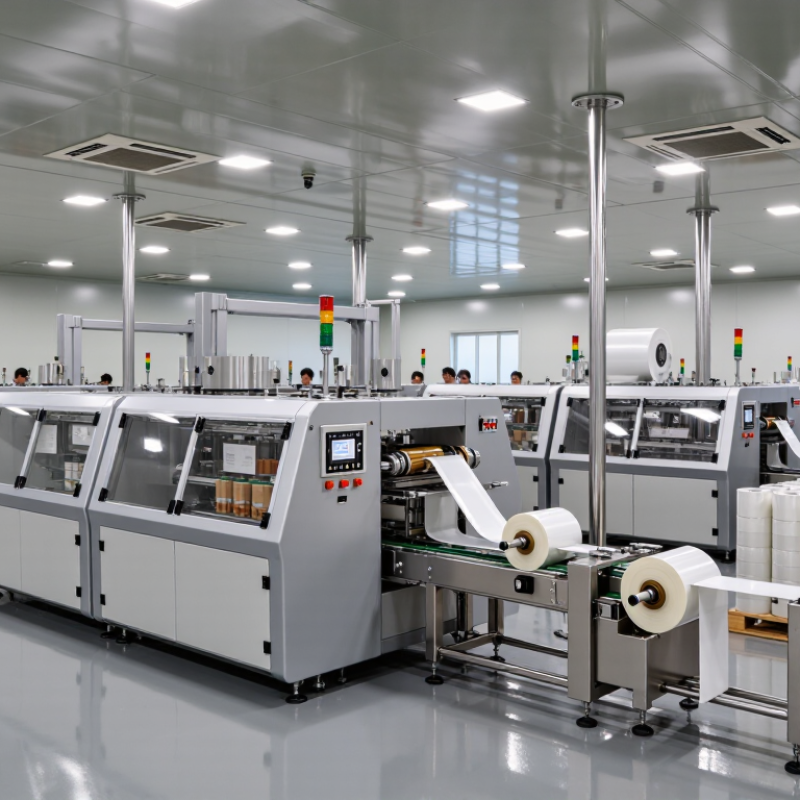
Stretch wrappers apply film around pallet loads to help stabilize cartons or other goods during handling. Check load dimensions, film pre-stretch, and whether the machine can wrap uneven pallets consistently. Shrink systems use heat to tighten film around individual products or grouped items. A heat tunnel needs suitable airflow and temperature settings, especially when packaging can deform or discolor. Test real products, not just empty boxes. Flow-wrapping machines feed a continuous film web around items, then seal the package along its length and ends. They suit products such as bars, trays, or small boxed goods, but accurate product spacing and film registration are essential. Small errors show quickly.
When comparing manufacturers, ask for trials using your product, chosen film, and target speed. Record output, seal quality, film waste, and changeover time. A polished demonstration can hide awkward adjustments. I have seen teams focus too much on headline speed and too little on daily cleaning or operator access. That is an easy mistake. Review training, spare-parts availability, and service response alongside machine specifications. A dependable choice fits the actual line, not just the brochure.
Compare Throughput: Automatic Pallet Wrappers Commonly Run at 20–40 Loads per Hour
What Is the Best Wrapping Machine Manufacturer in China?
Automatic pallet wrappers commonly run at 20–40 loads per hour. That equals roughly one completed load every 1.5 to 3 minutes. These figures are useful starting points, not guarantees. Actual throughput depends on pallet dimensions, load stability, film settings, and how quickly pallets enter and leave the wrapping area. A bulky, uneven load may need extra rotations. A standard, stable pallet can move faster.
Tips: Ask for a timed trial using your own pallet and film. Record the full cycle, including loading, wrapping, unloading, and film changes. Check whether the quoted rate includes conveyor movement or only the wrapping cycle. Small details matter.
When comparing machines, look beyond the headline speed. Observe how consistently the film stretches and whether the load stays secure at the top and base. Ask about recipe changes for different pallet types, operator training, and routine maintenance. A machine running near 40 loads per hour may not suit a line that feeds pallets slowly. We have seen speed estimates look convincing on paper, then fall short during changeovers. That gap deserves attention.
Assess Film Efficiency: Mechanical Pre-Stretch Ratios Commonly Reach 200%–300%
When comparing wrapping machines, a mechanical pre-stretch ratio of 200%–300% is a useful starting point, not a guarantee of lower film use. The ratio describes how far the rollers extend film before it reaches the load. Suppliers may calculate the percentage differently, so confirm the definition. A 200% increase can mean the film becomes three times its original length. Check the machine specification and run a test with your own film.
Watch the film at the corners. If it thins too much, tears, or loses holding force, the selected ratio may not suit the load. A practical trial can use a pallet of your usual products, the same roll width, and consistent wrap settings. Compare film weight per pallet and check whether the load shifts during handling. Small adjustments matter. Film type, temperature, load shape, and roller condition can all affect results. I would not judge a machine by its maximum ratio alone; a stable, repeatable setting is often more useful than an impressive number. The test may still miss real-world variation. That is worth remembering.
What Is the Best Wrapping Machine Manufacturer in China? — Assess Film Efficiency: Mechanical Pre-Stretch Ratios Commonly Reach 200%–300%
| Mechanical Pre-Stretch Ratio | Film-Length Multiplier | Illustrative Film-Length Conversion | Theoretical Film Reduction | Practical Assessment |
| 200% | 2.0× original length | 100 m of film becomes approximately 200 m after stretching. | 50% less film length than the unstretched baseline for equivalent coverage. | A useful reference point for evaluating film use. Check that the stretched film still provides the required load containment and resists punctures. |
| 250% | 2.5× original length | 100 m of film becomes approximately 250 m after stretching. | 60% less film length than the unstretched baseline for equivalent coverage. | Compare film consumption alongside wrapping consistency, load stability, and film breaks under the intended operating conditions. |
| 300% | 3.0× original length | 100 m of film becomes approximately 300 m after stretching. | About 66.7% less film length than the unstretched baseline for equivalent coverage. | Verify the ratio with the actual film and load. A higher setting does not by itself guarantee lower cost or adequate containment. |
How to interpret the figures: Here, a 200%–300% pre-stretch ratio means the stretched film reaches 200%–300% of its original length. Theoretical reductions assume equal coverage and no change in overlap. Actual film consumption and performance also depend on film properties, wrap pattern, load shape, containment-force requirements, and machine setup. Confirm results through a controlled test using the intended film and load.
Verify Safety and Quality: EN 415-6, ISO 12100, and ISO 9001
What Is the Best Wrapping Machine Manufacturer in China?
Choosing a wrapping machine manufacturer takes more than comparing speed and price. Check whether the machine’s design addresses the hazards found in real use. EN 415-6 covers safety requirements for pallet wrapping machines. ISO 12100 provides a framework for identifying risks and reducing them through design and safeguards. Ask for the applicable standards, a machine-specific risk assessment, and clear operating instructions. A certificate alone does not prove that every configuration is safe.
Tips: Ask to see the guarding, emergency stops, and film-carriage access points during a live demonstration. Check whether operators can load film without reaching into hazardous areas. Confirm that documents match the exact model and options you plan to buy.
ISO 9001 concerns a manufacturer’s quality management system, not the safety or performance of one machine. Check the certificate’s validity and scope, then ask how production checks, component traceability, and corrective actions are recorded. If possible, inspect a finished unit and review its test records. A tidy document folder is reassuring, but it cannot replace practical checks. I would also ask what happens when a test reveals a fault; the answer may be imperfect, but it should be specific and documented.
Rank Chinese Manufacturers by Customization, Service, and Total Cost of Ownership
A practical ranking should weight customization at 40%, service at 35%, and total cost of ownership at 25%. These are evaluation weights, not an independent laboratory ranking. For customization, ask whether the supplier can test your actual film, package dimensions, and line speed. Request a sample run. Watch for seal quality, changeover time, and rejected packs.
For service, rank suppliers higher when they provide clear commissioning plans, remote diagnostics, operator training, and stocked wear parts. Ask for response-time commitments and references from installations with similar products. A fast quotation is not proof of dependable support. Not always. Check what happens after the warranty ends, especially when a control component fails during a busy shift.
For total cost of ownership, compare purchase price with energy use, film waste, maintenance, downtime, and expected service life. Fortune Business Insights estimated the global packaging machinery market at US$47.95 billion in 2023, projecting US$65.64 billion by 2030. That growth makes careful supplier comparison more important, but market growth does not prove one machine is better. I would not treat any score as universal; product mix changes the weights. Ask each Chinese manufacturer for a written cost model based on your operating hours and throughput.