What Are Bulk Plastic Bottles and How to Buy Them?

Bulk plastic bottles are containers purchased in large quantities for manufacturing, retail, laboratories, hospitality, and everyday distribution. They may be made from HDPE, PET, LDPE, or polypropylene. Each material behaves differently. A clear PET bottle can display liquid color beautifully, while an opaque HDPE bottle protects light-sensitive products more effectively.

Packaging specialist Anne Marie Mohan offers a practical reminder: “The package is part of the product.” That idea matters when comparing bulk plastic bottles. Buyers should examine neck size, closure compatibility, wall thickness, capacity, and chemical resistance. A 500-milliliter bottle with a narrow neck may suit lotions, but it can frustrate users filling thicker liquids. Small details become expensive at scale.

The buying process should begin with the product, not the lowest unit price. Confirm the liquid’s viscosity, storage temperature, filling equipment, and expected shelf life. Request samples before placing a large order. Test them with the actual caps, labels, pumps, and shipping cartons. Do not assume a bottle is suitable because it looks strong.

Supplier reliability also deserves careful attention. Review material specifications, quality-control procedures, minimum order quantities, lead times, and documented food-contact or product-safety compliance where applicable. Requirements vary by market and intended use. Ask direct questions.

Mistakes happen.

A supplier may quote an attractive price while excluding caps, freight, tooling, or testing. Recyclability claims can also be incomplete. Responsible purchasing requires checking the resin code, recycled content, production consistency, and end-of-life options. The best bulk plastic bottles balance protection, usability, appearance, cost, and environmental responsibility without pretending that one design solves every need.
What Are Bulk Plastic Bottles and How to Buy Them?

What Are Bulk Plastic Bottles?

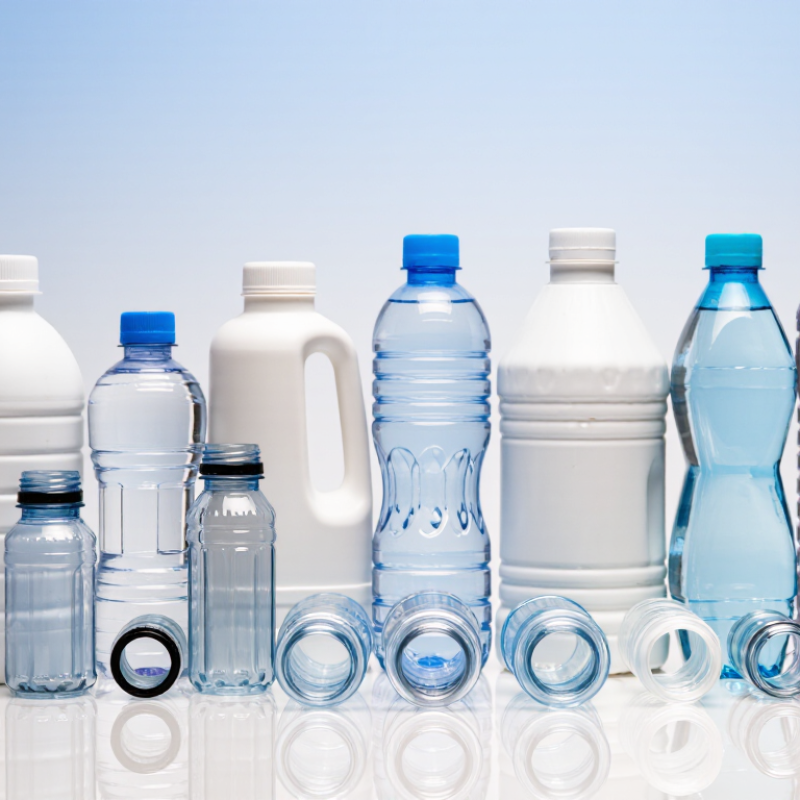
Bulk plastic bottles are empty containers purchased in cartons, cases, or pallets. They usually use PET, HDPE, or PP, depending on strength, clarity, and chemical resistance. Common sizes range from small travel bottles to large industrial containers. The category is broader than it sounds.

The OECD’s Global Plastics Outlook reports that global plastic waste reached 353 million tonnes in 2019. Packaging created about 40% of that waste. This figure makes bottle selection more important, not merely cheaper. Choose the correct resin, wall thickness, neck finish, and closure. PET offers clarity and light weight. HDPE feels tougher and more opaque. Recycled content can reduce virgin plastic use, but availability and quality may vary. I have seen buyers focus on unit price, then discover that caps leak during pallet transport. That mistake is expensive.

Tips: Request physical samples before ordering. Test filled bottles for leakage, squeezing, stacking, and temperature changes. Confirm the bottle volume, neck specification, closure compatibility, minimum order quantity, lead time, and pallet count. Ask for material documentation and relevant food-contact or chemical-resistance evidence when required. The Ellen MacArthur Foundation’s New Plastics Economy reports that packaging is a major driver of single-use plastic demand. Therefore, reusable formats or recycled content may deserve comparison. Still, sustainability claims need verification. A cheaper bottle is not always the better bottle.

What Types and Materials Are Available?

Bulk plastic bottles are sold in cartons, cases, or pallet quantities for food, cosmetics, cleaning products, and industrial liquids. The main material choices are PET, HDPE, PP, and LDPE. PET offers strong clarity and a crisp, rigid feel. HDPE resists many chemicals and protects light-sensitive contents better than clear plastic. PP tolerates higher temperatures, while LDPE creates soft, squeezable bottles. The right option depends on the product, filling temperature, closure, and transport conditions.

Shape matters as much as resin. Narrow-neck bottles suit liquids poured in controlled amounts. Wide-mouth containers work better for powders, creams, or thicker products. Dispensing bottles can reduce spills, but their extra parts may complicate recycling. Recycled-content versions are increasingly available, although color, odor, and supply consistency can vary. The OECD’s Global Plastics Outlook reports that global plastic production reached 460 million tonnes in 2019, while only 9% of plastic waste was recycled. Material selection should therefore include end-of-life planning, not only unit price.

When buying in bulk, request resin specifications, wall thickness, neck dimensions, closure compatibility, and migration documentation. Ask for sample bottles before approving a large order. A bottle that survives a laboratory test may still fail after vibration, stacking, or repeated squeezing. UNEP’s 2023 Turning off the Tap report states that plastic pollution could be reduced by 80% by 2040 through reuse, recycling, and redesigned products. That target is ambitious. Procurement decisions still need practical checks, because the most recyclable bottle is not always the most suitable one.

How to Choose the Right Bulk Bottles?

Choosing the right bulk bottles starts with the product, not the lowest quote. Liquid thickness, temperature, acidity, and light sensitivity all affect the container. Water-like formulas may suit lightweight PET bottles. Oils, cleaners, or thicker products often need stronger HDPE walls. Test the actual formula.

Check capacity carefully. A bottle labeled 16 ounces may not provide the exact usable fill volume. Leave enough headspace for expansion and filling equipment. Neck size matters too. Match the opening with the selected cap, pump, sprayer, or liner. Small mismatches can cause leaks.

Do not ignore wall thickness. Hold a sample under normal pressure and inspect its base, shoulders, and threads. I have seen attractive bottles fail because their closures warped during transport. Request samples before placing a large order. Fill them, invert them, squeeze them, and run a short drop test on a protected surface. These simple checks reveal problems early.

Ask the supplier for material details, dimensional tolerances, production lead time, minimum order quantity, and relevant test documentation. For products used with food, cosmetics, or household chemicals, confirm that the bottle suits the intended application and storage conditions. Clear bottles show the contents, but tinted or opaque plastic can offer better light protection. Color may also affect recycling decisions.

Bulk purchasing is not only about unit price. Compare freight, cartons, damaged-unit allowances, and storage space. I sometimes focus too heavily on appearance. That is a mistake. A plain bottle with reliable closures may perform better than a stylish one with inconsistent threads. Supplier communication matters. Get every specification in writing.

What Are Bulk Plastic Bottles and How to Buy Them? - How to Choose the Right Bulk Bottles?

Comparison Guide for Selecting Plastic Bottles in Bulk
Material Typical Transparency Common Capacity Range Key Properties Suitable Contents Important Limitations Recycling Identification Bulk-Buying Checkpoint
PET Clear to translucent 30 mL–5 L Lightweight, rigid, good clarity, and strong resistance to many diluted acids and oils Water, beverages, liquid food products, personal-care liquids, and household cleaners Not generally selected for high-temperature filling; can be vulnerable to some strong solvents and alkalis #1 PET or PETE Confirm bottle weight, neck finish, closure compatibility, and whether the package is designed for hot-fill or cold-fill use
HDPE Natural translucent, opaque, or colored 30 mL–20 L Durable, impact-resistant, lightweight, and broadly resistant to acids, bases, and many household chemicals Shampoo, detergent, milk containers, agricultural products, laboratory liquids, and industrial chemicals Usually less transparent than PET; some contents may permeate through the plastic over long storage periods #2 HDPE Check chemical-compatibility data, wall thickness, handle strength, and UN certification when required for regulated products
LDPE Translucent to opaque 15 mL–5 L Flexible, squeezable, lightweight, and resistant to many diluted chemicals Dispensing bottles, eye-care products, laboratory liquids, sauces, and low-viscosity personal-care products Lower stiffness and lower barrier performance than PET or HDPE; may deform under heat or heavy stacking #4 LDPE Evaluate squeeze recovery, dispensing-orifice size, closure seal, and resistance to stress cracking
PP Translucent, opaque, or clear depending on formulation 30 mL–5 L Good fatigue resistance and comparatively higher heat resistance than PE materials Food containers, laboratory packaging, caps, closures, and products exposed to moderate heat Can become brittle at low temperatures; clarity is often lower than that of PET #5 PP Verify the maximum filling and storage temperatures and confirm that the bottle and closure use compatible PP grades
PVC Clear, translucent, or opaque 30 mL–1 L Can provide good clarity and rigidity; formulation can be adjusted for different applications Some specialty packaging, technical liquids, and products requiring a specific barrier profile Less commonly preferred for many modern packaging programs; additives and processing conditions must be carefully controlled #3 PVC Confirm regulatory suitability, additive compliance, chemical compatibility, and end-of-life requirements before ordering
PCR Plastic Varies from clear to gray or colored Depends on the base resin and package design Uses post-consumer recycled resin to reduce reliance on virgin plastic; appearance may vary between production lots Suitable non-sensitive packaging applications when the resin grade meets product and regulatory requirements Color, odor, clarity, and mechanical performance can differ from virgin resin; not every PCR grade is suitable for direct food contact Resin code varies Specify the PCR percentage, source, certification, color tolerance, and whether the material is approved for the intended contents

Practical purchasing note: Before placing a bulk order, request samples and confirm capacity, dimensions, filled-product compatibility, closure fit, leak performance, shipping-pack configuration, minimum order quantity, lead time, and applicable food-contact or transport regulations. Capacity ranges shown are typical market ranges and vary by bottle design and supplier tooling.

Where Can You Buy Bulk Plastic Bottles?

Where can you buy bulk plastic bottles? Packaging wholesalers are a practical starting point for small and medium orders. They often stock standard sizes, clear containers, colored bottles, and matching closures. Local distributors can also reduce delivery time and freight damage. For larger quantities, buying directly from a manufacturer may provide better pricing and custom options. However, minimum order quantities can be surprisingly high.

Online wholesale marketplaces offer broad choices and quick price comparisons. Before ordering, request samples with the exact bottle shape, material, capacity, neck finish, and cap style. A bottle that looks suitable on a screen may feel too thin in hand. Check the supplier’s business registration, production details, quality records, and customer-service response. Ask for documents supporting intended food, cosmetic, household, or industrial use when relevant. Verify important certificates through the issuing organization instead of trusting a downloaded image.

Compare the complete cost, not only the unit price. Include tooling, labels, closures, packaging, freight, taxes, and possible breakage. Inspect sample cartons for crushed corners and weak inner protection. Confirm lead times and written replacement terms before paying. I would avoid rushing toward the lowest quote. It can hide inconsistent dimensions or late delivery. Even careful buyers miss details sometimes, especially when custom colors are involved. A written specification sheet keeps expectations clearer and makes supplier disputes easier to address.

How to Compare Prices, Quality, and Suppliers?

Buying bulk plastic bottles is mainly a comparison exercise, not a race for the lowest quote. Compare the delivered cost per usable bottle, including caps, labels, tooling, freight, and rejected units. A quote of $0.18 can become $0.24 after transport and defects. Request samples from the same production lot. Check wall thickness, weight, neck finish, cap fit, odor, and drop resistance. A bottle that feels thin may still perform well, but only testing can confirm it.

Material choice affects both price and application. PET offers clarity and strong shelf appeal, while HDPE usually provides better opacity and chemical resistance. Ask suppliers for resin details, food-contact documentation where relevant, dimensional tolerances, and batch traceability. The OECD’s Global Plastics Outlook reported 353 million tonnes of plastic waste in 2019, with only 9% recycled. That figure makes recycled content and end-of-life planning commercially important, not merely fashionable. However, recycled resin can vary in color and consistency. Request test data before approving it.

Supplier reliability deserves a weighted score. Include quality history, minimum order quantity, production capacity, payment terms, lead time, and corrective-action procedures. ISO 9001 certification can support process control, but it does not replace your own inspection. UNEP’s 2023 report, Turning off the Tap, states that plastic pollution could be reduced by 80% by 2040 using existing solutions. That encourages lighter designs, yet aggressive weight reduction can cause dents or leakage. I once treated the cheapest offer as the best benchmark; that was a mistake. A better comparison uses total cost, verified performance, and documented supplier evidence.