
Construction and demolition work creates an enormous material-flow challenge. The U.S. Environmental Protection Agency reported about 600 million tons of construction and demolition debris in 2018. That volume was more than twice the amount of municipal solid waste generated that year. Eurostat also identifies construction as the European Union’s largest waste-generating sector, representing more than one-third of total waste.
This pressure makes a dependable Debris Bag supplier important for contractors, distributors, and industrial buyers. A wholesale supplier from China should offer more than attractive pricing. Buyers need verified fabric weight, practical load ratings, strong stitching, and consistent dimensions. A reinforced woven polypropylene bag may handle broken bricks, timber offcuts, drywall, and garden waste, but performance depends on its seams and lifting loops. Small details matter.
Samples should be tested before large orders. Ask for production records, packaging details, inspection procedures, and relevant compliance documents. The International Organization for Standardization provides quality-management guidance through ISO 9001, although certification alone does not guarantee product performance. That point deserves attention. A certificate cannot replace a filled-bag test beside a loading bay.
Experienced suppliers can explain liner options, UV resistance, printing, closure styles, and pallet quantities. They should also state limitations clearly. A very low quotation may hide lighter fabric or weaker handles. Industry figures are valuable, but they are not perfect forecasts for every market. Site conditions differ. Waste materials differ. The best China Debris Bag partner combines documented quality, responsive communication, and realistic wholesale advice.
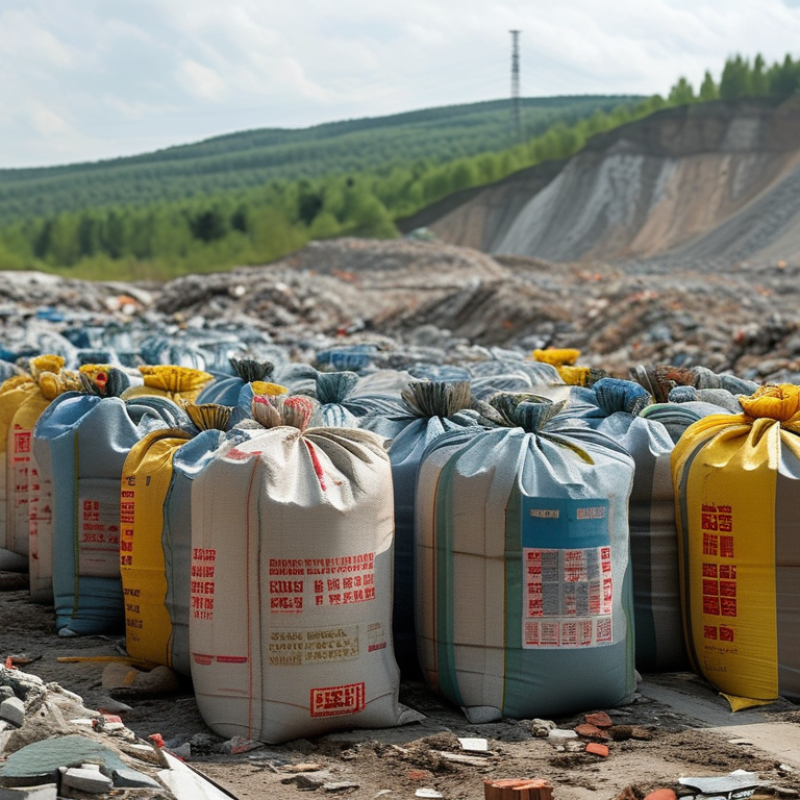
China has become a leading debris bag supplier because its manufacturing network supports large, flexible orders. Factories can produce woven polypropylene bags for concrete pieces, soil, timber, and garden waste. Materials can be adjusted for different load requirements, storage conditions, and handling methods.
Consistency matters. Experienced suppliers usually control fabric weight, stitching strength, dimensions, and lifting loops during production. Buyers can request samples before confirming a wholesale order.
A practical inspection should check seam spacing, bag capacity, handle attachment, and resistance to tearing. These details often reveal problems that product photos cannot show.
China’s supply chain also supports custom printing, packaging, and container planning. Clear specifications help reduce misunderstandings between buyers and factories. Reliable suppliers should provide production updates, test information, and accurate shipping documents. However, no supplier is perfect. A low price may hide thinner fabric, weaker seams, or inconsistent sizing. Wholesale buyers should compare samples, inspection records, lead times, and communication quality rather than choosing by price alone. This careful process makes Chinese sourcing more dependable for recurring debris bag orders.
China Top Debris Bag Supplier for Wholesale?
Key Types and Materials of Wholesale Debris Bags
Wholesale debris bags are available in several practical types. Woven polypropylene bags suit concrete fragments, bricks, and rough renovation waste. Their cross-weave structure resists tearing during lifting and transport. Heavy-duty polyethylene bags work better for lighter dust, insulation, and household renovation debris. Some models include drawstrings, while others use reinforced handles for easier carrying.
Material thickness matters. A 90-micron bag may handle light waste, but dense rubble needs stronger construction. Check the bag’s dimensions, seam quality, loading capacity, and moisture resistance before ordering. In my experience, oversized bags can become difficult to move when filled. That detail is easy to overlook. Reliable suppliers should provide sample testing, material specifications, production records, and clear quality inspection procedures. Certifications may also support purchasing decisions, but they should match the actual product.
Tips: Match the bag to the debris weight, not only its volume. Test filled samples on stairs, uneven floors, and loading areas. Ask whether the handles are stitched or heat-sealed. Small weak points can fail suddenly. It is also wise to confirm packaging quantity and storage conditions. Prolonged sunlight can weaken some plastics, even before use. Recycled content may reduce material impact, but consistency can vary between batches. Ask for realistic performance data, not impressive claims alone.
A reliable China debris bag manufacturer should prove more than a low wholesale price. The U.S. Environmental Protection Agency estimated 600 million tons of construction and demolition debris in 2018. That volume demands consistent bag strength, not attractive samples alone. Ask for production records, raw material specifications, and batch-level inspection reports. A clean sample can still hide weak stitching.
Check whether the factory controls fabric weight, seam strength, coating, and lifting-loop performance. For reusable bulk bags, testing aligned with ISO 21898 can provide a practical reference. Request test results from an independent laboratory, with the tested model and production batch clearly identified. Also inspect how workers seal and stack finished bags. Small process details matter. I have seen suppliers discuss load capacity while ignoring sharp rubble abrasion.
A useful audit includes a factory video call, sample compression testing, and a trial order before large purchasing. Confirm the actual working load, safety factor, dimensions, printing tolerance, and packaging method in writing. The United Nations Environment Programme reports that construction activity consumes substantial global resources, so reducing damaged packaging has operational value. Still, recycled material is not automatically better for every debris application; inconsistent quality can create failures. That point deserves honest discussion with the manufacturer.
This 100-point wholesale evaluation framework prioritizes the factors that most directly affect debris bag safety, consistency, and supply reliability. Material quality and load performance receive the highest weight, followed by compliance, production consistency, delivery reliability, and documentation.
Wholesale debris bags need more than a large volume discount. They need a practical fit for real job sites. The U.S. Environmental Protection Agency estimated 600 million tons of construction and demolition debris in 2018. That figure was more than twice the amount of municipal solid waste. Bag size, material thickness, and closure style can directly affect handling efficiency.
Custom sizing helps reduce unused space and overfilled bags. A 30-inch by 50-inch bag may suit light renovation waste, while a wider format can hold bulky insulation or broken drywall. Printing can identify waste categories, loading limits, handling instructions, or project codes. Clear printing supports safer sorting, but excessive ink coverage may complicate recycling review. Packaging also matters. Flat-packed bundles save warehouse space, while compressed rolls can simplify delivery and counting. Both options deserve testing before a large order.
Tips: Request samples from the same production material. Test them with sharp edges, dust, and uneven weight. Do not judge strength by thickness alone. Seam quality, resin formulation, and storage conditions also matter. European Environment Agency data shows construction and demolition waste represents over one-third of total waste generated in the European Union. That makes dependable packaging choices more important, though “eco-friendly” claims still need evidence. Ask for recycled-content percentages, bag dimensions, print durability, and packaging specifications in writing. Field conditions are messy. A perfect specification on paper can still fail beside a loaded dumpster.
For wholesale debris bags, a reliable order begins with clear site requirements. Buyers should specify bag dimensions, fabric weight, lifting-loop design, closure type, and expected load. A supplier with production experience can recommend a workable specification, not merely the cheapest one. I usually request a pre-production sample and a written order sheet. It should record color, tolerance, printing, quantity, and packing method. Small details matter.
Quality control should follow the bag through several checkpoints. Incoming fabric is checked for weight, coating, and visible defects. During sewing, workers inspect seams, loops, and corner reinforcement. Random finished bags can receive load tests under controlled conditions. Photos, batch numbers, and inspection records improve traceability. Yet no inspection is perfect. A missed stitch can still appear after packing, so buyers should define replacement terms before production. That conversation may feel uncomfortable, but it prevents vague disputes.
Shipping planning connects factory output with the jobsite schedule. The supplier should confirm carton or bale dimensions, gross weight, container space, and loading date. For larger orders, split shipments may reduce storage pressure, though they can increase freight costs. Documents must match the actual cargo and destination requirements. Before dispatch, I compare the packing list with the physical count. One carton was once short in a busy loading area. We corrected it, but the delay exposed a weak final check. A second count is worth the minutes.