Choosing an hdpe container involves more than comparing prices or picking a familiar shape. Global buyers must consider product compatibility, shipping conditions, filling equipment, and how customers will handle the package. A narrow-neck bottle may suit liquid soap, while a wide-mouth jar makes powders easier to scoop. Small details matter. A cap that loosens during transport can create costly spills, even when the bottle itself performs well.
This guide introduces ten common HDPE container types, from bottles and jerry cans to drums and storage bins. It explains where each format is useful and which practical details deserve attention, including wall thickness, closure fit, handle strength, and stackability. HDPE is valued for its toughness and moisture resistance, but it is not a universal solution. Some products need specific barrier properties, and suitability should be checked through material and compatibility testing. Requirements for food or other regulated uses also differ between markets, so buyers should confirm applicable standards with qualified suppliers. That step is easy to overlook. Even experienced purchasers can focus too much on catalog dimensions and too little on real filling and transport conditions. The best choice is the one that works reliably in its intended supply chain, not simply the one that looks right on a specification sheet.
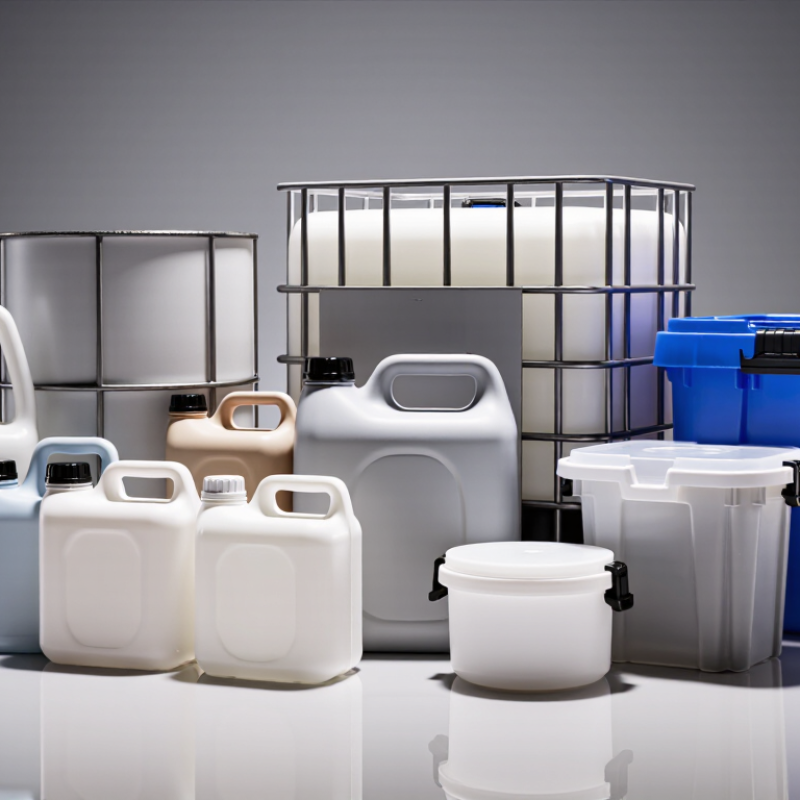
HDPE containers are commonly classified by shape, opening style, and nominal capacity. Shape affects how easily a container pours, stacks, and fits on a shelf. Narrow-neck bottles suit liquids that need controlled pouring, while wide-mouth jars allow easier filling and access. Rectangular jerrycans use space efficiently in storage and transport. Round drums are easier to roll, but can waste shelf space.
Capacity can mislead. Small bottles often hold about 30 milliliters to 1 liter, while larger bottles and jugs may range from 1 to 5 liters. Jerrycans commonly hold 5 to 25 liters, and drums can hold considerably more. Large intermediate containers may reach hundreds of liters, depending on their design. These ranges are typical examples, not fixed industry rules. Check the stated usable volume, not just the outside dimensions.
Shape matters. A square container may stack neatly, yet its corners can make pouring less comfortable. Round containers may be easier to handle, though they need more storage space. Buyers should also compare neck width, handle position, closure fit, and wall thickness. A container that looks suitable on a specification sheet may feel awkward when full. Physical samples can reveal details that drawings miss.
Typical capacity ranges by container shape, in liters
These common formats are not ranked by popularity. Capacity ranges are indicative commercial offerings, not fixed standards, and vary by design, application, and supplier.
HDPE bottles and jugs suit many consumer and commercial products because they are lightweight, durable, and easy to handle. A narrow-neck bottle works well for controlled pouring, while a wide-mouth jug makes filling and cleaning easier. Some designs include molded grip areas that feel steadier with wet hands. Details matter. A container that looks efficient on paper may still feel awkward when lifted from a crowded shelf.
For consumer products, clear volume markings and a secure cap can make daily use simpler. In commercial settings, sturdy handles and stackable shapes help during storage and transport. However, thicker walls add weight and material, while overly light containers may dent under pressure. The right balance depends on the product, filling process, and expected handling. It is worth testing samples with the actual contents; a package can behave differently than expected.
Tips: Check cap fit, label adhesion, and grip comfort with a filled sample. Compare dimensions against shelves and shipping cartons, too. Small checks can prevent frustrating fit issues later.
HDPE drums and pails suit bulk storage when buyers match container size to handling needs. Drums typically serve larger liquid or solid loads, while pails are easier to lift, portion, and stage near work areas. Check wall strength, lid or closure design, stacking needs, and compatibility with the intended contents. A wide opening helps with scooping, but can make controlled pouring harder. Small details matter.
PlasticsEurope’s Plastics—The Fast Facts 2023 report estimates that packaging represented about 39% of European plastics conversion in 2022. This is regional data, not a global measure, but it shows packaging’s substantial role in plastics use. For buyers, the practical choice is not simply “drum or pail.” Consider filled weight, pallet layout, handling equipment, and whether containers will be moved repeatedly. A drum that stacks neatly may still be awkward to pour from. That trade-off is easy to overlook.
Tips: Test a filled sample before placing a large order. Confirm closure fit, grip, and pouring control with the actual contents and handling routine. Keep a few containers aside for inspection; scuffs and deformation can reveal problems that a specification sheet may not show.
| Container Type | Typical Capacity | Design and Closure | Common Applications | Handling and Selection Considerations |
|---|---|---|---|---|
| Open-head HDPE drums | Approximately 30–220 L | Removable lid secured with a clamp ring; wide opening for filling and emptying. | Powders, pastes, solids, and products requiring access through a large opening. | Check lid and gasket compatibility with the contents. Confirm stacking limits and whether the drum is suitable for the intended transport conditions. |
| Tight-head HDPE drums | Approximately 30–220 L | Fixed top with one or more bung openings for filling and dispensing. | Liquids such as detergents, process chemicals, and selected food ingredients. | Verify bung size, seal material, and filling method. Product compatibility and transport requirements should be assessed for each formulation. |
| HDPE pails with lids | Approximately 1–25 L | Portable, wide-mouth container; may have a snap-on or lever-lock lid and a handle. | Paints, coatings, construction products, food ingredients, and maintenance materials. | Useful for smaller lots and manual handling. Confirm lid retention, handle strength, and whether a tamper-evident feature is needed. |
| HDPE jerrycans | Approximately 5–30 L | Compact, usually rectangular body with an integrated handle and screw cap. | Liquids distributed in portable quantities, including cleaning products and selected industrial liquids. | Choose a neck and cap suited to filling and pouring needs. Test for leakage and compatibility with the specific contents. |
| HDPE intermediate bulk container (IBC) inner bottles | Commonly about 1,000 L; other capacities are available | Moulded inner bottle held in a protective outer frame, typically with a top inlet and bottom outlet. | Bulk movement and storage of compatible liquids in industrial and commercial supply chains. | Check the complete IBC assembly, valve, frame, pallet, and stacking requirements. Capacity and approvals vary by design and market. |
| HDPE bottles and canisters | Approximately 0.1–5 L | Small-format containers with screw caps, dispensing closures, or other fitted tops. | Samples, household and institutional products, laboratory supplies, and smaller-volume liquids. | Closure performance, dosing needs, and pack size are key selection factors. Use a closure tested with the intended product. |
| Wide-mouth HDPE jars | Approximately 0.1–5 L | Short, wide opening with a screw-on lid, allowing easy access to the contents. | Granules, powders, creams, and other products that are easier to remove through a wide opening. | Consider opening diameter, liner requirements, and moisture protection. Confirm the jar and closure are suitable for the contents and storage conditions. |
| Rectangular stackable HDPE containers | Approximately 5–60 L | Space-efficient body, often fitted with a lid and handles or handholds. | Warehouse storage, ingredients, parts, and other products where efficient use of floor or shelf space matters. | Compare footprint, loaded stacking limits, and access to the contents. Stackability depends on the specific container design and load. |
| HDPE dispensing containers with taps | Approximately 5–30 L | Container fitted with a spigot or tap for controlled dispensing; may also include a top filling cap. | Water-based products, liquid ingredients, and applications requiring repeat dispensing. | Check tap material, seal compatibility, flow rate, and cleaning access. Keep the outlet protected during storage and transport. |
| HDPE lined or barrier-enhanced containers | Varies by container format, commonly small bottles through drums | HDPE body combined with a compatible liner or barrier layer to address specific product requirements. | Products for which permeation, odour transfer, or product protection requires additional evaluation. | Barrier performance is design-specific. Obtain compatibility and performance data for the exact container, closure, product, and storage conditions. |
Capacity ranges are indicative and vary by design, supplier, and market. Material compatibility, food-contact status, dangerous-goods suitability, and transport approvals must be verified for the specific container and its intended contents.
HDPE carboys, jerry cans, and IBC totes serve different liquid-transport needs. Carboys suit smaller batches and controlled pouring. Their narrow necks reduce splashing, but can slow filling. Jerry cans are easier to carry by hand, especially when handles are molded into the body. IBC totes move larger volumes efficiently; their cage, pallet base, and bottom outlet help with forklift handling and dispensing. A scratched tote may still work, but inspect seams, valves, and closures before reuse.
Material choice matters beyond the trip. The OECD’s Global Plastics Outlook (2022) estimates that global plastic production reached 460 million tonnes in 2019, while only 9% of plastic waste was ultimately recycled. This is a broad plastics statistic, not HDPE-container-specific, but it underlines why durable designs and clear end-of-life planning matter. Still, HDPE is not magic. Sunlight, temperature, impact, and the liquid itself can affect service life; confirm compatibility using supplier data and real operating conditions.
Tips: Match capacity to handling equipment. Check neck and outlet dimensions before ordering. Leave headspace for filling and movement. Keep closures clean, and record each container’s contents and inspection date. Small details matter. A quick field check can catch a damaged valve before a leak reaches the loading floor.
HDPE canisters suit products that need a manageable grip and a controlled pour. Their molded handles help during repeated transfers, while narrow openings can reduce spills. Check the closure and liner against the product, especially when contents may soften seals or leave residue. Small detail. A canister that feels sturdy when empty may flex when filled, so test it at working weight.
Buckets work well for larger volumes of dry goods, pastes, and maintenance materials. Their broad handles make carrying easier, and compatible lids help limit dust and moisture exposure. For stacking, compare the filled bucket’s shape, lid fit, and wall stiffness—not just its listed capacity. Storage conditions matter. Heat and prolonged loading can change how a container performs.
Wide-mouth containers offer easier access for scoops, brushes, or gloved hands. They can be useful for powders, granules, and thick mixtures that resist pouring. The opening is convenient, but it may also expose contents during frequent use. There is no universal best format. Match dimensions, resin grade, closure style, and product compatibility, then trial a filled sample under real handling conditions; a specification sheet alone cannot reveal every awkward grip or stubborn lid.