
A personal care appliance accessories factory designs and produces the replaceable or supporting parts used with grooming and beauty devices. Its products may include hair-clipper guards, shaver heads, brush attachments, filters, cords, and charging stands. The exact range varies by supplier. The term can sound broader than it is.
In practice, a personal care appliance accessories factory in the field may handle product development, material selection, tooling, molding, assembly, and inspection. A small attachment still needs careful checks. Its connector must fit the appliance, its edges should feel smooth, and its materials should remain consistent from batch to batch. Packaging and clear product identification matter, too. A part that looks right may still fit poorly.
Dieter Rams, a respected consumer-product designer, offered a useful principle: “Good design is as little design as possible.” Applied to accessories, that means avoiding needless complexity while making parts practical, durable, and easy to use. But a factory’s real capabilities cannot be judged from a polished sample alone. Buyers should ask how fit, finish, and consistency are checked across production. That takes more effort. It is worth it. Even a straightforward accessory can reveal gaps between design intent and everyday use. Those gaps deserve honest review, not a quick claim of quality.
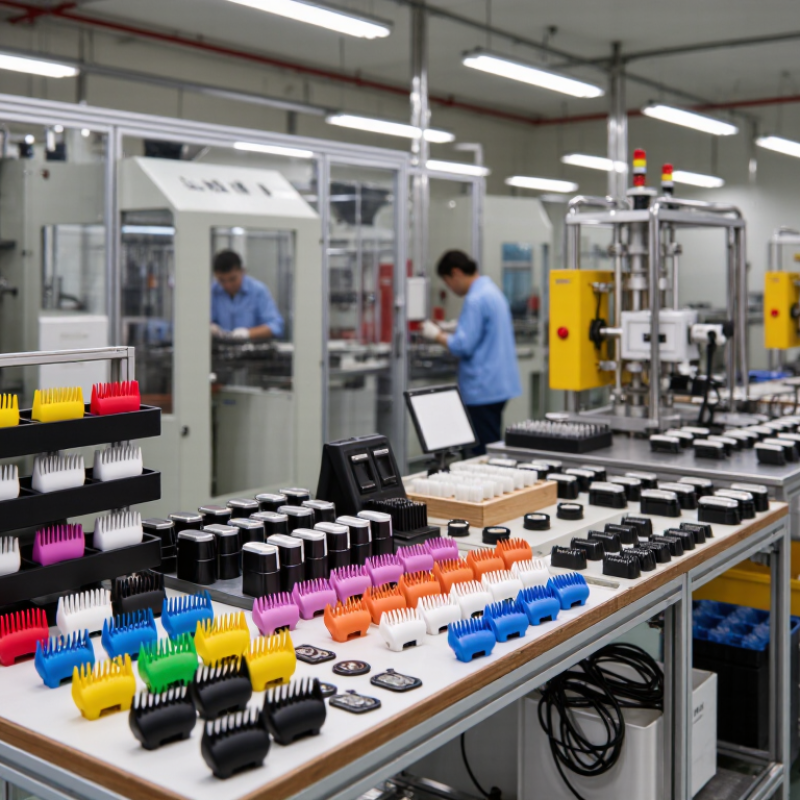
A personal care appliance accessories factory makes the removable or supporting parts used with grooming devices. Typical products include clipper guards, hair-dryer concentrator nozzles, replacement filters, comb attachments, charging stands, and travel cases. The factory may turn a product drawing into a mold, select plastics or metals, and manage molding, assembly, and inspection. Fit matters. A guard that slips or a nozzle that blocks airflow can make an otherwise well-built appliance frustrating to use. Checks may include dimensional measurement, attachment and removal cycles, heat exposure, and visual inspection. Production details vary by product, so one test plan cannot cover every accessory.
Tips: Ask suppliers for material specifications, sample-fit records, and inspection criteria. Keep a “golden sample” for comparison—but review it when designs change.
The Global E-waste Monitor 2024, published by UNITAR and the ITU, estimates that the world generated 62 million tonnes of e-waste in 2022; 22.3% was formally collected and recycled. This figure covers all e-waste, not personal-care accessories specifically. Still, it makes durability and replaceable parts worth considering during product planning. A factory can help by tracking material batches and checking whether frequently replaced pieces can be supplied separately. These steps do not guarantee a longer product life. Poor fit, unclear drawings, or rushed tooling can still lead to waste; those weak points deserve review.
A personal care appliance accessories factory makes parts that attach to, protect, or support grooming and care devices. Common products include trimming combs, shaving-foil frames, replacement brush heads, and protective caps. These components may look simple, but accurate fit matters. A loose comb can tug at hair, while a rough edge may feel uncomfortable against skin. Small details count.
Hair styling tools often use concentrator nozzles, diffusers, filter screens, and heat-resistant storage supports. Facial-care and massage devices may need interchangeable heads, soft covers, or charging cradles. Factories select materials based on the part’s purpose, expected wear, and contact with heat or moisture. They also check dimensions, surface finish, and attachment strength. A sample that fits once may loosen after repeated removal.
Good production includes practical testing, not just visual inspection. Workers can check whether a brush head locks securely and whether a filter is easy to remove for cleaning. Packaging matters, too; small combs and replacement heads can be scratched or misplaced in transit. One detail is easy to overlook: accessories must remain usable after ordinary cleaning and storage. The best design is not always the most complicated one.
A personal care appliance accessories factory turns practical needs into parts that fit and work consistently. Design often starts with the appliance interface: dimensions, locking points, heat exposure, and the user’s grip. A comb attachment may need rounded teeth, while a storage cap needs a snug but removable fit. Small details matter.
Engineers create drawings and prototypes, then check fit on real appliance samples. They may adjust a clip by fractions of a millimeter after repeated attachment tests. Material selection depends on heat, flexibility, skin contact, and cleaning habits. Once approved, production can involve molding, trimming, surface checks, and packing. Inspectors look for cracks, sharp edges, loose joints, and inconsistent dimensions. Not every early sample is right; a tight fit can become frustrating after repeated use.
Tips: Share appliance measurements, photos, and intended use before requesting a sample. Ask how fit, durability, and batch consistency are checked. Keep an approved sample as a reference, though real-world wear may reveal flaws that a desk review misses.
How accessories are designed and manufactured: material selection is one early design decision, affecting product weight, strength, and mold design.
Approximate density ranges for common, unfilled material grades. Actual values vary by formulation and supplier; density is shown in grams per cubic centimeter.
A personal care appliance accessories factory makes items such as comb attachments, guards, diffuser parts, and replacement heads. Material choice affects fit, heat resistance, cleaning, and skin contact. ABS is common for rigid housings; silicone can provide a flexible grip or seal. Stainless steel may suit trimming components. Suppliers should document resin grades and colorants, while incoming checks can verify dimensions, surface defects, and material records.
Small parts matter. A loose attachment can overheat, detach, or expose an edge. Factories typically inspect fit on the intended appliance, test repeated attachment cycles, and check heat aging, drop resistance, and electrical insulation when relevant. For powered personal-care appliances, IEC 60335-1 and IEC 60335-2-23 provide key safety requirements; the applicable tests depend on the product design. A factory should retain batch records and link test results to production lots. A polished sample is not proof that every production run is consistent.
The European Commission’s Safety Gate 2023 annual report recorded 3,412 safety alerts across product categories, not personal-care appliances alone. That figure underlines why traceable checks matter, but it cannot predict a factory’s own defect rate. Inspectors should review test methods, calibration records, and corrective-action logs, not just certificates. Some failures appear only after repeated use. That is easy to overlook. A sensible quality plan also records borderline results; rejecting only obvious failures may leave weak parts in circulation.
| Area | Common materials or processes | Typical quality checks | Safety and compliance relevance | Practical production controls |
|---|---|---|---|---|
| Molded housings and attachments | Common choices include ABS, polycarbonate (PC), polypropylene (PP), and polyamide (PA), selected for the intended temperature, impact, and chemical exposure. | Check dimensions, fit, surface finish, color consistency, cracks, flash, and deformation. Verify resin grade and supplier documentation against the approved specification. | Material suitability depends on how the accessory is used and on the finished appliance design. Relevant appliance safety requirements may include IEC 60335-1 and, where applicable, IEC 60335-2-23 for skin or hair care appliances. | Control molding parameters, maintain approved material records, and inspect first-off samples after tool or process changes. |
| Seals, grips, and soft-touch parts | Silicone rubber and thermoplastic elastomers (TPE) are commonly used for seals, grips, and flexible components. | Inspect dimensions, hardness where specified, bonding, surface defects, and fit. Test resistance to expected heat, moisture, oils, or cleaning products when relevant. | For parts that contact skin, assess material suitability for the intended use and market. Do not assume that a material is skin-safe solely from its generic material name. | Define the intended contact conditions and verify supplier declarations and test evidence against the product specification. |
| Metal parts and cutting components | Stainless steel may be used for blades, foils, springs, or fasteners; grades and finishes depend on function and exposure conditions. | Check dimensions, burrs, sharp edges, corrosion, finish, and assembly alignment. Confirm material grade through traceable supplier records or specified material tests. | Sharp edges, moving parts, and corrosion can affect user safety and performance. Relevant hazards should be assessed as part of the finished appliance evaluation. | Use controlled deburring and finishing processes; segregate nonconforming parts and retain lot identification for traceability. |
| Coatings and surface treatments | Depending on the design, parts may use plating, paint, or other surface finishes for appearance, corrosion protection, or wear resistance. | Check coating coverage, color, adhesion, scratches, and corrosion resistance using methods specified for the product and finish. | Chemical substance requirements depend on the destination market and product scope. EU RoHS restrictions apply to covered electrical and electronic equipment; REACH obligations may also be relevant. | Maintain coating specifications and supplier declarations; review restricted-substance documentation for applicable markets. |
| Electrical connectors and powered accessories | Where included in an accessory, parts may include insulated conductors, connectors, switches, or electronic components suitable for their rated conditions. | Depending on the design, checks may include continuity, polarity, insulation, connector retention, and functional tests using approved procedures. | Electrical safety requirements depend on the finished product and intended use. IEC 60335 standards may apply to household appliances; the applicable parts and editions must be confirmed for the product and market. | Use calibrated test equipment and controlled test limits. Record results and isolate failed units before release. |
| Assembly and functional fit | Assembly may combine molded parts, seals, fasteners, and metal components using mechanical fastening, press fitting, or other specified methods. | Check fit, retention, movement, alignment, and operation with the compatible appliance where appropriate. Verify that parts do not detach or interfere with intended use. | Retention, accessibility, heat exposure, and moving-part hazards should be considered in the finished-product risk assessment and applicable safety testing. | Use defined work instructions, approved assembly tools, and documented checks at appropriate production stages. |
| Sampling, records, and traceability | Inspection plans, batch records, supplier documents, and nonconformance records support consistent production control. | Sampling may follow a documented plan. ISO 2859-1 provides attribute-sampling procedures, but the appropriate inspection level and acceptance criteria must be defined by the organization. | A quality management system can support consistent controls; ISO 9001 is a quality management standard, not a product safety certification. | Record material lots, inspection results, corrective actions, and release decisions so affected production can be identified when needed. |
Note: Applicable standards, regulations, test methods, and acceptance criteria depend on the accessory, the finished appliance, and the destination market. Confirm current requirements with the relevant conformity assessment process before production or sale.
A personal care appliance accessories factory connects product design with everyday use. It may produce comb attachments, protective caps, brush heads, charging stands, or storage cases. These parts look simple. Their fit and finish still matter: a loose attachment can frustrate users, while rough edges may feel uncomfortable.
The factory sits between material suppliers and appliance assemblers. It receives plastics, silicone, or metal components, checks incoming batches, and turns approved designs into repeatable parts. During production, workers and inspection tools check dimensions, color, surface finish, and connection points. Small sample tests can reveal whether a clip holds firmly or a case closes cleanly. Packaging and batch records then help keep parts identifiable as they move to assembly or distribution.
Timing matters. An appliance launch may depend on accessories arriving in the right quantities, not just on the main device. Clear forecasts and sample approvals reduce avoidable delays, though they cannot remove every supply-chain problem. A factory may also spot a design issue late, after tooling is made. That is costly, and worth admitting. Good coordination means sharing measurements, tolerances, and changes early, then checking real production parts rather than relying on drawings alone.