
Rhino Container
A Novvia Group Company

Blog
Top 10 Types of Plastic Vacuum Bottles for Buyers?
Choosing a Plastic Vacuum Bottle starts with understanding what the term means. It may describe an airless dispensing container for skincare or personal-care products. It can also refer to a plastic-bodied insulated bottle, though many insulated models rely on metal vacuum chambers. The label can be confusing. Buyers should check the product’s construction before comparing options.
This guide introduces ten common types and the details that separate them. For dispensing bottles, useful features include pump style, capacity, refillability, and how much product remains after use. A clear bottle makes the fill level easy to see, while an opaque one may better protect light-sensitive formulas. For drink bottles, buyers can compare wall construction, lid design, weight, and cleaning access. A narrow opening may prevent spills, but it can make washing awkward. Small detail. Big difference.
No single design suits every product or user. A compact airless bottle may work well for travel-size lotion, while a larger pump container may suit frequent daily use. Check material descriptions and care instructions rather than relying on marketing terms alone. I would also verify whether a pump can handle the product’s thickness; that detail is easy to miss. The following types offer a practical starting point for comparing functions, trade-offs, and everyday handling before making a purchase.
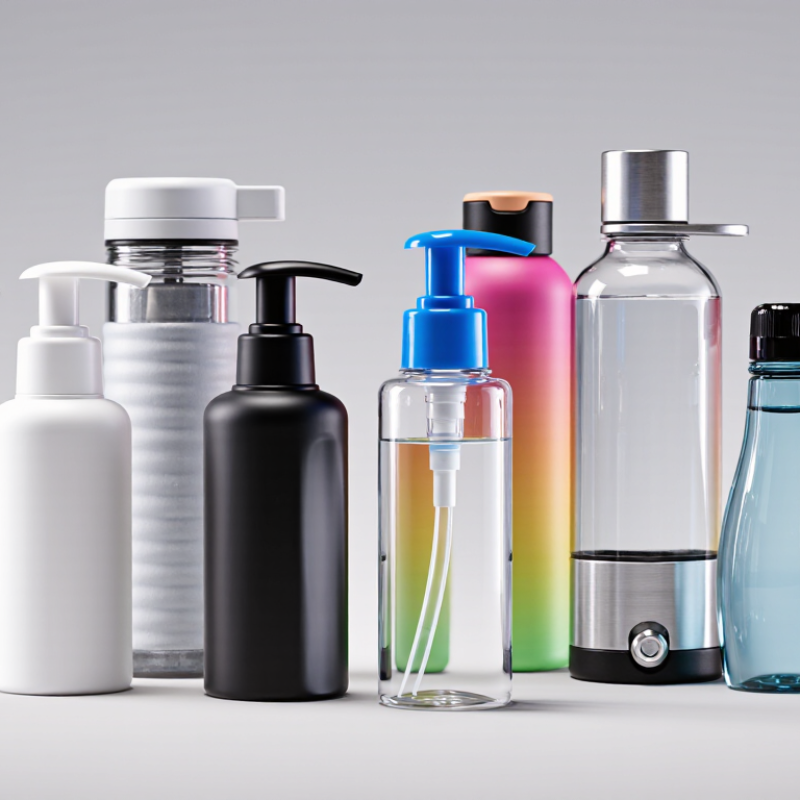
Define Plastic Vacuum Bottles by Airless Dispensing Systems and Core Components
Top 10 Types of Plastic Vacuum Bottles for Buyers?
Plastic vacuum bottles are better understood by their dispensing systems than by their outer shape. “Airless” does not mean the container has no air inside. Instead, a piston or flexible pouch rises as product is dispensed, limiting contact with incoming air. This can help protect sensitive creams and lotions from oxidation and reduce leftover product.
The core components usually include a plastic bottle, an airless pump, an actuator, and a protective cap. In a piston design, a movable platform lifts the product toward the pump. Pouch systems collapse as the contents leave. The pump’s dip tube is typically absent, which can help dispense thicker formulas. Small details matter: check pump output, closure fit, and whether the material suits the product. Not every formula behaves well in every mechanism.
Tips: Test a filled sample before ordering in volume. Press the actuator slowly and watch for uneven dosing or trapped product. Also check how much remains near the base. A bottle may look nearly empty while still holding usable cream. That part is easy to overlook.
Top 10 Types of Plastic Vacuum Bottles for Buyers: Airless Dispensing Systems and Core Components
| Type | Airless System | Core Components | Common Materials | Typical Uses | Buyer Checks |
|---|---|---|---|---|---|
| 1. Standard piston airless bottle | A piston rises inside the bottle as the pump dispenses product, reducing the amount of air that can contact the remaining contents. | Outer bottle, movable piston, pump head, actuator, outlet valve, and protective cap. | PP or PET bottle components; pump parts may use PP, PE, or other compatible plastics. Seals may use elastomers. | Lotions, creams, gels, and some serums. | Check piston movement, priming, dose consistency, leakage, and compatibility with the product formula. |
| 2. Lotion airless pump bottle | A piston-based airless package paired with a pump designed to handle thicker or more viscous formulas. | Bottle, piston, wider product pathway, pump chamber, actuator, and dispensing outlet. | Commonly PP or PET for the container, with plastic pump components and compatible seals. | Body lotion, hand cream, and richer facial moisturizers. | Test the actual formula at different temperatures; viscosity can affect priming, flow, and the amount dispensed per stroke. |
| 3. Fine-mist airless bottle | A piston advances the product toward a specialized pump that produces a spray rather than a stream or lotion dose. | Airless bottle, piston, spray pump, actuator, nozzle, and protective overcap. | Usually PP or PET for the bottle; nozzle and pump components are selected for formula compatibility. | Low-viscosity facial or body formulas designed for spray application. | Confirm that the formula can pass through the nozzle, and evaluate spray pattern, clogging, priming, and dose output. |
| 4. Precision-nozzle airless bottle | A piston-based system feeds a narrow outlet for controlled, localized dispensing. | Bottle, piston, pump mechanism, narrow nozzle or tip, actuator, and cap. | Typically PP or PET containers with plastic dispensing components; material choice depends on the formula. | Targeted-use gels, eye-area products, and concentrated treatments. | Check outlet hygiene, dose control, residue buildup, and whether the product’s viscosity suits the narrow opening. |
| 5. Dual-chamber airless bottle | Two separate product chambers feed through one or two dispensing paths, helping keep ingredients apart until use. | Outer body, two chambers or cartridges, one or more pistons, pump assembly, and separate or combined outlets. | Commonly PP or other compatible plastics; seals and internal barriers must suit both formulas. | Two-part products or formulas whose components are intended to remain separate before dispensing. | Verify the chamber ratio, independent sealing, simultaneous delivery, and compatibility of each formula with its own product path. |
| 6. Refillable airless bottle with replaceable cartridge | An airless inner cartridge is replaced or refilled while the reusable outer casing is retained. | Reusable outer shell, replaceable product cartridge, piston or other airless mechanism, pump, and closure. | The outer shell and cartridge may use different plastics, such as PP or PET, depending on the design. | Personal-care products sold in recurring refills or intended for repeat use. | Check refill availability, cartridge fit, user-friendly replacement, cleaning instructions, and whether the pump is reused or replaced. |
| 7. Slim or mini airless bottle | A compact piston-based airless system scaled for small fill volumes and portable use. | Small bottle, piston, compact pump, actuator, and cap. | Often PP or PET, with the final choice depending on shape, wall thickness, and product compatibility. | Sample sizes, travel products, and small-volume treatments. | Test the minimum usable fill, pump priming, dose accuracy, and durability during transport. |
| 8. Oval or flat-profile airless bottle | A piston or compatible airless cartridge is fitted into a non-round body designed for a flatter profile. | Shaped outer bottle, piston or cartridge, pump assembly, actuator, and cap. | Commonly molded from PP or PET; the design must maintain suitable wall strength and sealing. | Products where shelf presentation or compact storage is important. | Assess stability, paneling or deformation, label fit, pump alignment, and the package’s ability to dispense fully. |
| 9. Large-capacity airless bottle | A larger piston-based package moves product toward the pump as the contents are dispensed. | Large bottle body, piston, pump, actuator, outlet valve, and cap. | PP or PET are commonly considered, with material and wall design selected for the size and application. | Higher-volume lotions, cleansers, or professional-use products, subject to formula and pump suitability. | Check piston travel, package stability, pump durability over repeated use, shipping strength, and the remaining product at end of use. |
| 10. Collapsible-liner airless bottle | A flexible inner liner collapses as product is dispensed, limiting air entry into the product space. | Outer bottle, flexible liner or pouch, dispensing pump, outlet valve, and closure. | The outer body and liner may use different plastic structures; barrier and seal performance depend on the specific construction. | Formulas that benefit from reduced air exposure, where a compatible liner-and-pump system is available. | Confirm liner compatibility, seal integrity, product evacuation, and whether the system is genuinely airless rather than a conventional dip-tube pump. |
Note: These types describe common airless mechanisms and package configurations. Actual performance depends on the complete package design, the formula, and compatibility testing; material options and available formats vary by supplier.