
Rhino Container
A Novvia Group Company

Blog
Top Blueberry Flavored Ice Cream Powder Suppliers
Blueberry-Flavored Ice Cream Powder serves a practical purpose: it brings berry flavor and color to a mix without requiring fresh fruit at every production step. For buyers, the details matter. A sample may smell vivid in the pouch, then taste faint after freezing. Texture matters, too.
The opportunity sits within a much larger category. Grand View Research estimated the global ice cream market at about USD 79.1 billion in 2023 and projected continued growth through 2030. That figure covers ice cream, not blueberry powder specifically. Public market reports rarely isolate this small ingredient segment, so supplier claims deserve careful checking. Ask for ingredient specifications, application guidance, and samples tested in your own dairy or non-dairy base.
Ice-cream scientist H. Douglas Goff and co-author Richard Hartel describe ice cream as “a frozen food, but it is also a foam, an emulsion, and a suspension” in their textbook Ice Cream. That formulation insight is relevant here: powder performance depends on more than flavor. Particle size, solubility, sweetness, acidity, and color stability can all shape the finished scoop. A blueberry note should remain recognizable after mixing and freezing. Not just in the dry blend.
This guide compares leading suppliers of Blueberry-Flavored Ice Cream Powder, focusing on product consistency, customization, documentation, and support for real production trials. Treat rankings as a starting point, not a substitute for testing. One limitation is worth admitting: supplier brochures can look polished, while batch performance may vary. A careful sample run can reveal what a catalog cannot.
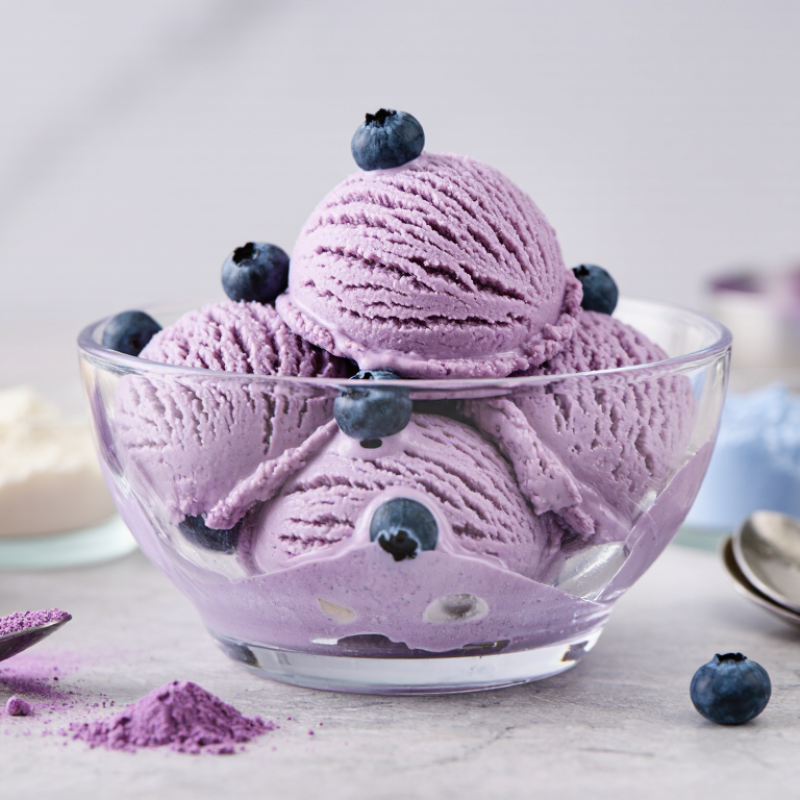
Understanding Blueberry-Flavored Ice Cream Powder
Blueberry-flavored ice cream powder is a dry blend used to add berry taste, sweetness, and color to a frozen dessert base. Its composition varies by supplier. A formula may contain fruit solids, flavorings, sugar, dairy ingredients, stabilizers, or colorants. Check the ingredient list and technical sheet, rather than judging by the product name alone. “Blueberry” does not always mean a high fruit content. Color can mislead.
For a useful comparison, request samples and prepare each powder using its stated dosage and mixing instructions. Note how easily it disperses, whether tiny clumps remain, and how the flavor changes after freezing. A mix that tastes vivid before churning may seem muted when cold. Keep the base, batch size, and freezing conditions consistent during trials. Record texture, sweetness, aroma, and color under the same lighting. It sounds fussy, but small differences matter. Ask suppliers about specifications, recommended use levels, and batch-to-batch consistency. One limitation is that no powder can guarantee a fresh-fruit impression in every recipe; dairy fat and added sugar can soften its brighter notes. Reflect on the finished scoop, not just the powder’s smell.
Top Blueberry Flavored Ice Cream Powder Suppliers - Understanding Blueberry-Flavored Ice Cream Powder
Supplier categories are shown instead of company or brand names. This is a practical comparison, not a ranked list; product availability and specifications vary by supplier and formulation.
| Supplier Category | Typical Product | Blueberry Flavor Approach | Potential Ice Cream Application | Details to Confirm Before Purchasing |
|---|---|---|---|---|
| Ice cream and dessert premix manufacturers | Powdered bases formulated for frozen desserts; recipes may include sugar, milk-derived ingredients, stabilizers, or emulsifiers. | Blueberry flavor may be included in the premix or supplied separately as a flavor powder or fruit preparation. | Convenient for preparing a consistent base when the product is designed for the buyer’s equipment and process. | Required liquid addition, mixing and freezing instructions, dairy allergens, stabilizer system, and whether blueberry ingredients are included. |
| Flavor ingredient suppliers | Concentrated powdered flavorings, including natural, artificial, or combined flavor systems, depending on the product. | Flavor is designed to provide a recognizable blueberry profile; it may not contain a substantial amount of actual blueberry fruit. | Can be used to adjust or standardize flavor in a separately prepared ice cream base. | Flavor declaration, carrier ingredients, recommended dosage, solubility or dispersion guidance, and suitability for frozen dairy or non-dairy products. |
| Fruit ingredient processors | Blueberry powders made from fruit, including products produced by drying methods such as freeze-drying or spray-drying. | Provides fruit-derived flavor and color; some powders contain only fruit, while others may include carriers or processing aids. | Can add fruit character to a base, although fruit powders may affect color, texture, and moisture balance. | Fruit percentage, processing method, carrier ingredients, particle size, moisture specification, microbiological criteria, and storage instructions. |
| Bakery and beverage powder suppliers | Powdered fruit-flavor ingredients developed for uses such as beverage mixes, fillings, or dry dessert applications. | May use fruit powder, flavoring, color ingredients, or a combination; composition varies by product. | Some products may be adaptable to frozen desserts, but they should be tested in the intended recipe. | Declared end-use suitability, performance in cold mixtures, dispersibility, sweetness, color ingredients, and any usage restrictions. |
| Custom blending and contract manufacturing suppliers | Made-to-specification blends combining a base powder with flavor, fruit ingredients, sweeteners, or other functional ingredients. | Can be configured around a target blueberry flavor profile and the buyer’s ingredient or labeling requirements. | May suit buyers seeking a tailored dry mix for a defined production process. | Ingredient specification, allergen controls, batch consistency, testing and documentation, production lead time, and minimum order quantity. |
| Non-dairy frozen dessert ingredient suppliers | Plant-based powdered bases or ingredients formulated for frozen desserts; possible base ingredients differ by product. | Blueberry flavor can be supplied within the mix or added as a separate fruit or flavor ingredient. | Suitable only when the formulation and processing instructions are designed for the intended plant-based product. | Plant source, allergen and cross-contact statements, emulsifier and stabilizer system, preparation instructions, and frozen-texture performance. |