
Choosing the right Food Boxes begins with understanding what each box must protect. A bakery carton may need a grease-resistant lining, while a shipping box must survive drops, stacking, and damp warehouse floors. Folding cartons suit cereals, snacks, and frozen meals because they print clearly and store flat. Corrugated boxes offer stronger cushioning for online orders. Rigid boxes provide a premium presentation, though they often require more material and storage space.
Packaging expert Dr. Gordon L. Robertson describes packaging as “a system of preparing goods for transport, distribution, storage, retailing, and end-use.” That definition shows why appearance alone cannot decide the best option. A box that looks elegant but collapses around a six-pack of glass jars has failed its basic purpose. Small details matter. Consider board thickness, closure strength, moisture resistance, ventilation, and whether the box fits automated packing lines.
The top types of Food Boxes will differ by product, budget, delivery distance, and sustainability goals. Paperboard boxes can reduce shipping weight, but they may need added protection for oily or wet foods. Corrugated packaging is dependable, yet oversized designs can waste space and increase transport emissions. Insulated boxes help protect chilled products, although their materials are not always easy to recycle.
There is no perfect box.
A practical comparison must include real handling tests, not only attractive samples. This article examines the leading Food Boxes, their common uses, strengths, limitations, and the decisions buyers should reconsider before selecting one.
What Are the Top Types of Food Boxes?
Food boxes protect food, control portions, and support safer transport. Their design depends on moisture, temperature, weight, and serving size. Folding paperboard boxes suit dry meals, bakery items, and takeaway portions. Corrugated boxes provide stronger protection for bulk shipments and delivery orders. Molded fiber boxes handle hot foods while offering a more rigid structure. Plastic containers resist leaks, although their environmental impact requires careful review.
According to the FAO Food Loss Index 2022, about 13.2% of food was lost globally between harvest and retail in 2021. Food boxes cannot solve every loss problem, but better fit, cushioning, and sealing can reduce damage. The UNEP Food Waste Index Report 2024 estimated 1.05 billion tonnes of food waste in 2022. That figure makes package performance more than a visual choice.
Small details matter. A soup box needs a dependable barrier and a secure lid. A frozen-food carton needs strength during temperature changes. Recyclable paper may fail when grease or moisture contaminates it. That weakness deserves more attention. In practical testing, I would check compression, leakage, stacking, opening ease, and disposal instructions. Cost also matters, but the cheapest box can create higher waste. Specifications should follow actual food conditions, not attractive assumptions.
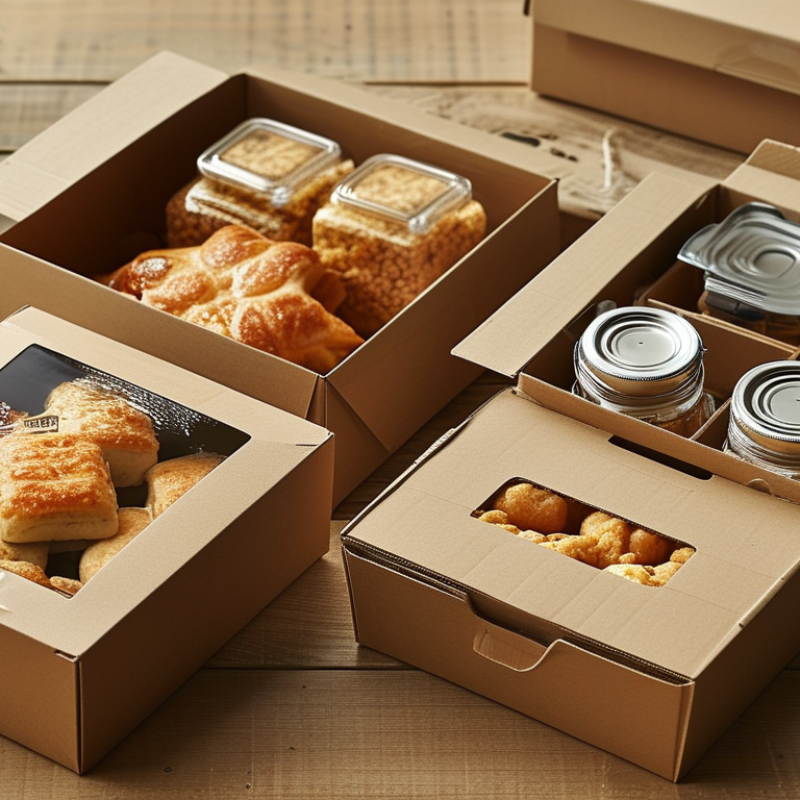
Paper and cardboard food boxes remain practical choices for many food applications. They are lightweight, stackable, and easier to store than rigid containers. Folding paperboard cartons suit dry snacks, pastries, cereals, and small takeaway portions. Their smooth surfaces also support clear product information and simple decorative printing. Corrugated cardboard boxes provide stronger protection because their fluted middle layer absorbs pressure during transport. These boxes work well for meal deliveries, produce, and larger bakery orders. Each type serves a different need.
For bakery items, paperboard boxes can hold cookies, bread, and cakes without feeling excessively heavy. Some designs include small windows, allowing customers to inspect the food without opening the package. Takeout cartons often use folded locking tabs, which reduce the need for extra fasteners. Grease-resistant treatments help contain oils and sauces. However, some coatings may make recycling more difficult. That detail is often overlooked. The material should also resist moisture when food is warm or slightly wet, but excessive moisture can still weaken the box.
In practical packaging checks, I look at the bottom panel first. It carries the greatest load. Small tests help. I place warm food inside, lift the box, and inspect the folds after several minutes. If the base softens or the corners open, the design needs adjustment. Food-contact suitability should be confirmed through reliable supplier documentation and applicable local requirements. Print clarity, fold accuracy, and ventilation also affect the user’s experience. I once preferred a thinner box because it looked cleaner. It failed under a heavy filling. That was a useful mistake.
| Food Box Type | Typical Material | Key Features | Common Uses | Moisture and Grease Resistance | Recycling Considerations |
|---|---|---|---|---|---|
| Folding Carton | Paperboard, commonly made from virgin or recycled fiber | Lightweight, printable, flat-packed, and easy to die-cut into different shapes | Cereal, pasta, tea, frozen foods, bakery products, and dry snacks | Basic paperboard has limited resistance; coatings or inner bags may be needed for wet or oily foods | Generally recyclable when clean and free from extensive plastic or foil coatings |
| Corrugated Shipping Box | Linerboard with a fluted paperboard layer between outer sheets | High stacking strength, cushioning, protection during transport, and multiple flute profiles | Meal-kit deliveries, produce, beverage multipacks, bulk food, and e-commerce shipments | Standard grades are not waterproof; waxed or coated grades provide greater resistance but may affect recycling | Widely recyclable when dry, clean, and separated from non-paper components |
| Paperboard Takeout Box | Food-grade paperboard, often with a grease-resistant treatment | Pre-glued or self-locking construction, convenient carrying shape, and optional ventilation features | Fried foods, noodles, rice dishes, sandwiches, bakery items, and takeaway meals | Designed for short-term contact with warm food; performance depends on the coating and food temperature | Recyclability may be reduced if heavily soiled or lined with plastic, wax, or other non-fiber materials |
| Paperboard Tray | Stiff food-grade paperboard, sometimes laminated or coated | Open-top presentation, easy product access, low material weight, and compatibility with overwrap | Fresh produce, meat, seafood, bakery goods, confectionery, and prepared meals | Uncoated trays absorb liquids; coated versions offer improved resistance for chilled or greasy products | Usually recyclable if the tray is fiber-based, clean, and accepted by the local recycling system |
| Gable-Top Food Box | Folded paperboard, frequently combined with a moisture barrier | Built-in carrying handle, spacious opening, attractive shelf presentation, and efficient flat storage before assembly | Bakery products, popcorn, candy, snacks, and takeaway foods | Suitable for dry or moderately greasy foods; extended exposure to liquids can weaken the paperboard | Recycling depends on whether the box has a separable or accepted barrier coating and whether it is food-soiled |
| Sleeve and Tray Set | Paperboard sleeve combined with a paperboard, molded-fiber, or other food-contact tray | Product visibility, branding space, easy opening, and separation of structural and display functions | Ready meals, bakery assortments, chocolates, snack portions, and premium food presentations | The tray or inner barrier provides most of the protection; the sleeve mainly supports presentation and handling | Components are easier to recycle when they can be separated and each material is accepted locally |
| Molded Fiber Food Box | Molded cellulose fiber made from recycled paper or plant-based fiber | Rigid shape, cushioning, renewable fiber content, and suitability for compartmented designs | Takeout meals, produce, egg products, bakery goods, and protective food inserts | Uncoated fiber absorbs moisture and oil; approved barrier treatments improve performance for wet foods | Often recyclable or compostable under the correct local conditions, but coatings and food contamination must be considered |
| Rigid Paperboard Box | Thick paperboard assembled into a fixed, non-collapsible structure | Excellent dimensional stability, premium appearance, strong product protection, and reusable storage potential | Gift foods, confectionery, specialty tea, dry ingredients, and presentation-focused products | Usually requires an inner pouch, liner, or coating for direct contact with moist or oily foods | Recyclability is generally favorable if decorative laminates, magnets, foam, and mixed-material inserts are removed |
Note: Food-contact suitability, coating performance, and recycling acceptance vary by material specification, food type, temperature, contamination level, and local regulations.
What Are the Top Types of Food Boxes?
Plastic, Foam, and Biodegradable Food Containers
Plastic food boxes remain popular because they are light, stackable, and resistant to leaks. They protect sauces, salads, and refrigerated meals during delivery. However, the OECD’s Global Plastics Outlook reports that packaging created about 40% of global plastic waste in 2019. Many plastic boxes also lose recycling value when food residue or mixed materials remain attached. Clear plastic may look recyclable, but local collection rules differ.
Foam containers are inexpensive and provide strong insulation. They keep hot noodles warm and prevent condensation from soaking paper bags. Their weakness is durability after disposal. Foam breaks into small pieces easily and is rarely accepted in household recycling systems. Biodegradable containers can reduce fossil-plastic use, especially when made from plant fibers. Yet “biodegradable” does not always mean home-compostable. Some products require industrial heat, moisture, and controlled processing. The United Nations Environment Programme’s 2023 report warns that material changes alone cannot solve packaging waste. Design and collection systems matter too.
Tips: Match the box to the meal. Use leak-resistant plastic for oily foods and fiber containers for dry dishes. Check whether a biodegradable box requires commercial composting. Remove food scraps before disposal. Test lids with warm soup before large orders. I have found that attractive packaging can still fail during transport. A damp fiber box may collapse before reaching the customer. Reported environmental impacts also vary by manufacturing energy, transport distance, and reuse frequency. Truthfully, no container performs best in every situation.
Specialized food boxes protect meals during takeout, delivery, and storage. The right design depends on temperature, moisture, portion size, and handling time. A box that suits dry pastries may fail with hot noodles or oily sauces.
Takeout boxes often use grease-resistant paperboard or molded fiber. They should close firmly without crushing delicate food. Small vents can release steam and reduce sogginess, but oversized vents may cool meals too quickly. In a busy kitchen, clear portion labels help staff pack orders accurately. Simple details matter. A loose lid can ruin the customer’s experience.
Delivery boxes need stronger corners, stable stacking, and reliable leak resistance. Compartments can separate rice, vegetables, and sauces during movement. For long routes, insulated containers help preserve heat or cold, though they cannot correct poor temperature control. Tamper-evident closures may also show whether an order was opened. I have seen teams focus on appearance and overlook condensation. That choice often weakens crisp food.
Food storage boxes require tight seals, suitable materials, and enough space for safe handling. Transparent walls make leftovers easier to identify, while stackable shapes save refrigerator space. Boxes intended for repeated use should tolerate washing without warping or retaining odors. Not every container belongs in a freezer or microwave, so instructions must be checked carefully. A perfect box does not exist. Staff still need sensible packing habits, clean surfaces, and timely storage.
Choosing a food box starts with the food’s moisture, temperature, weight, and travel time. Dry items suit folding cartons or paperboard sleeves. They are light and easy to print. Corrugated boxes handle heavier goods, stacked meals, and delivery movement better. For oily or wet foods, add a food-safe barrier liner. Otherwise, the box may soften quickly. It happens more often than packaging plans admit.
Cold foods need a different approach. Insulated boxes with gel packs can protect seafood, dairy, and prepared meals during delivery. The FDA Food Code recommends holding cold time-temperature-controlled foods at 41°F (5°C) or below. A box alone cannot maintain that temperature. Use a tested pack arrangement and monitor the warmest point. For hot foods, vented paperboard containers reduce sogginess and preserve texture. Tight sealing can trap steam. That sounds safer, but it may ruin crisp food.
Material choice also affects waste and customer expectations. The UNEP Food Waste Index Report 2024 estimated 1.05 billion tonnes of food were wasted globally in 2022. Better packaging cannot solve waste alone, yet it can reduce crushing, leakage, and premature spoilage. Fiber-based molded boxes suit produce and bakery items when moisture resistance is adequate. Rigid containers offer stronger protection, but they use more material and storage space. PMMI’s packaging industry research continues to identify convenience, sustainability, and delivery performance as major design pressures. The right box is rarely the cheapest one. Test it with real food, real condensation, and real handling. Something will fail. That is useful evidence.