Choosing bulk plastic containers is not simply a matter of finding the lowest price per unit. The right container must protect its contents, suit filling and storage conditions, and move reliably through your supply chain. A drum that fits a pallet but cannot withstand repeated stacking may create more cost than it saves. Small details matter.
The scale of packaging waste makes material and format choices worth examining. The OECD’s Global Plastics Outlook estimates that packaging accounted for about 40% of global plastic waste in 2019. This figure describes waste, not the performance of any single container, but it highlights why businesses should assess durability, reuse potential, and end-of-life options early. Requirements also vary by product: a container for dry ingredients may need different moisture protection than one holding a liquid cleaner or a temperature-sensitive ingredient.
A practical selection process starts with measurable needs. Confirm capacity, dimensions, resin type, wall strength, closure compatibility, and resistance to the product’s contents. Then check how containers will be filled, labeled, stacked, transported, and stored. Request technical specifications and samples, and test them under realistic handling conditions. That test is easy to skip. It shouldn’t be. Supplier claims can guide a shortlist, but they cannot replace a trial using your actual product and equipment. This guide explains how to compare bulk plastic containers with those operational details in mind, while weighing upfront cost against dependable performance over time.
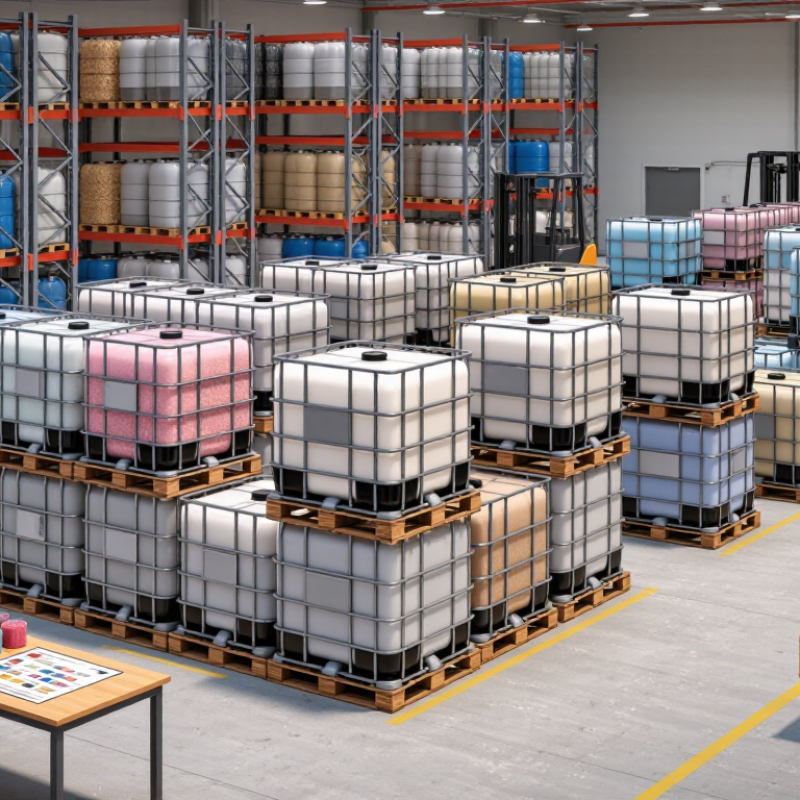
Before comparing bulk plastic containers, map the product, daily volume, and handling route. A dry powder needs different access and sealing from a liquid ingredient. Record the largest batch, fill temperature, density, and whether staff pour, scoop, or pump the contents. Measure the real load. A container’s advertised capacity may not match usable capacity once headspace is considered. Check aisle width, pallet dimensions, shelf clearance, and how full units move through the facility. Small details matter.
Then define cleaning, stacking, and storage conditions. Will containers sit near sunlight, washdown areas, or changing temperatures? Confirm material compatibility with the actual product and cleaning routine; do not assume every plastic performs alike. Specify required lid fit, handles, labels, and maximum stacking height. Test a sample under normal operating conditions before ordering at scale. This step can feel slow, but replacing a poor fit is slower. I would also revisit the plan after the first production run; real workflows often expose overlooked needs.
Waste and end-of-life deserve a place in the specification. The U.S. Environmental Protection Agency’s 2018 Advancing Sustainable Materials Management report estimated that containers and packaging generated 82.2 million tons of U.S. municipal solid waste, or 28.1% of the total. That figure covers multiple materials, not plastic alone, but it underscores why reuse, durability, and local recovery options belong in purchasing decisions. Ask suppliers for material details, then check what your facility can actually collect and reuse.
Bulk container selection starts with the material, not just the price per unit. HDPE is often chosen for impact resistance and everyday handling; polypropylene tolerates higher temperatures in many applications. PET offers clarity, useful when staff need to identify contents quickly. These are general traits, not guarantees: check the supplier’s technical data for chemical compatibility, temperature limits, and load capacity. Small details matter.
Design changes performance, too. A wide mouth speeds filling and scooping, but needs a well-fitting lid to limit spills. Stackable square containers use shelf space efficiently; tapered shapes may nest more easily when empty. For liquids, inspect the neck, seal, and closure torque rather than judging the body alone. It is easy to overlook how often containers are opened during a shift. That trade-off deserves a real-world test.
End-of-life options should influence the choice. The OECD’s Global Plastics Outlook (2022) estimates that only 9% of plastic waste was recycled globally in 2019. The U.S. EPA’s 2018 materials report recorded 14.5 million tons of plastic containers and packaging generated, with 2.1 million tons recycled. These figures are not a forecast for one business, but they show why simpler, clearly identified designs can help. Avoid unnecessary layers, and ask local recyclers which resins and formats they accept. A cheaper container can become costly if it cracks, leaks, or cannot be recovered.
Compare typical material densities when evaluating container weight and material choice.
Representative density values are shown: HDPE, 0.953 g/cm³; polypropylene (PP), 0.905 g/cm³; and PET, 1.395 g/cm³. These are approximate midpoints of common material ranges; actual values vary by grade and formulation. Density alone does not determine the best container—also consider compatibility, impact resistance, temperature requirements, and container design.
Choosing capacity starts with the product, not the shelf. Estimate the usual fill volume, then leave room for settling, pouring, or expansion. A container filled to the brim can spill during handling. Too much headspace, though, may waste storage space and increase shipping costs. Test a sample with the actual product. Check whether staff can lift it comfortably when full. Small details matter. A wide opening can speed scooping, while a narrow neck may help control pouring. Measure the space available on shelves and packing lines before ordering in bulk.
Shape affects more than appearance. Straight-sided containers often pack neatly and use shelf space efficiently. Tapered sides may nest when empty, but can make labels harder to apply smoothly. Round containers are easy to grip, while square shapes can fit closely together. Consider how workers will stack, carry, and clean them. Then choose a closure that suits both the contents and daily use. Screw caps are familiar and reusable; snap-on lids can be quicker for frequent access. For liquids, check the seal with a filled container stored upright and on its side. Test it filled. A liner may improve sealing, but it can also slow packing. Closure fit, opening effort, and repeat use are worth checking on a small trial order; a neat specification sheet cannot reveal every handling problem.
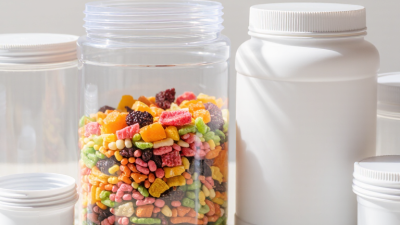
Bulk containers may look identical, yet resin type, wall thickness, and closures affect safe use. Match the material to the contents, temperature, cleaning routine, and storage conditions. For food, cosmetics, or chemicals, request documentation showing suitability for the specific application. Do not rely on a generic “food-grade” claim alone. Ask for evidence.
Review test reports, material declarations, and batch traceability before placing a large order. Check that documents identify the exact product and intended use, not merely a similar container. If containers will hold liquids, inspect the cap fit and ask how leak testing is performed. A sample filled and stored under normal conditions may reveal warping, odor, or seepage that a brochure will not show.
Supplier reliability matters as much as product specifications. Ask about production capacity, lead times, quality checks, and how defects are handled. Clear answers and consistent samples are good signs; vague promises deserve follow-up. Request a written specification and keep approved samples for comparison with later shipments. I would not assume one successful delivery guarantees the next. Checks take time, and no checklist catches everything, but documented conversations make problems easier to trace.
How to Choose Bulk Plastic Containers for Your Business
Assess the full landed cost, not just the price per container. Include lids, freight, pallet fees, storage, and any setup charges. A low unit price can lose its appeal when oversized cartons consume valuable warehouse space. Ask suppliers for written quotes at several order quantities, and check whether prices depend on a minimum order.
Test samples with the product you actually plan to store. Fill a few containers, close them, and leave them upright and on their sides overnight. Check for leaks, warped lids, sharp edges, and labels that peel away when damp. If containers will be stacked, test a realistic stack on a stable shelf. Small details matter. Confirm that the material and temperature range suit your intended use; a sample test does not replace published specifications.
Plan bulk orders around sales history and replenishment time. Estimate how many containers you use each month, then include a modest buffer for delays or demand changes. Review carton dimensions and pallet quantities before committing, especially if receiving space is tight. A spreadsheet may look convincing, yet still overlook slow-moving stock. Start with an order size your team can inspect and store comfortably, then adjust future quantities based on actual use.
Compare common container formats against capacity, handling needs, sample checks, and order-planning factors. Dimensions and weights below are representative planning figures; confirm the exact specification with suppliers before placing an order.
| Container format | Typical material and capacity | Approx. external size (L × W × H) |
Approx. empty weight | Indicative unit-cost budget (10,000 units) |
Sample checks before approval | Bulk-order planning points |
|---|---|---|---|---|---|---|
| Small round tub with lid For sauces, snacks, or small parts |
Polypropylene (PP) 250 mL |
Approx. 95 × 95 × 55 mm | Approx. 12–18 g | US$0.06–$0.16 each Budget estimate; lid included |
Check lid fit and seal, stack stability, cracking after handling, and suitability for the intended filling temperature. For food use, request documentation for the intended application. | Confirm whether tubs and lids ship assembled or separately. Check nesting and case quantity to estimate storage space and freight volume. |
| Wide-mouth jar with screw cap For powders, creams, or dry goods |
High-density polyethylene (HDPE) 500 mL |
Approx. 90 × 90 × 115 mm | Approx. 25–40 g | US$0.12–$0.32 each Budget estimate; cap included |
Check thread engagement, cap torque, leakage when inverted, panel deformation, and compatibility with the actual product. Test any liner or induction seal separately. | Confirm cap and jar color, neck finish, and label area before ordering. Request production samples from the same mold and material specification. |
| Rectangular bottle with closure For liquid products and refills |
HDPE 1 L |
Approx. 80 × 65 × 250 mm | Approx. 45–75 g | US$0.20–$0.55 each Budget estimate; closure included |
Fill with the intended liquid and check for leakage, stress cracking, odor or color change, cap fit, and performance after storage and transport simulation. | Verify closure type, filling-line fit, case orientation, and pallet pattern. Allow time for label or artwork approval if decoration is required. |
| Small jerrycan with handle and cap For bulk liquids or concentrates |
HDPE 5 L |
Approx. 180 × 130 × 280 mm | Approx. 180–300 g | US$0.55–$1.30 each Budget estimate; cap included |
Check handle strength, cap and neck fit, leak resistance, drop performance when filled, and compatibility with the liquid. Confirm the specified wall thickness and container mass. | Plan for the larger freight footprint and filled-container handling. Confirm stacking limits, pallet height, and whether caps are supplied fitted or separately. |
| Industrial pail with lid For ingredients, powders, or materials |
HDPE pail; lid may be HDPE or PP 20 L |
Approx. 300 × 300 × 370 mm | Approx. 800–1,200 g | US$1.50–$3.50 each Budget estimate; lid included |
Check lid retention, closure or tamper-evidence features, handle attachment, stacking stability, and leakage with the filled product. Test the pail in the expected storage conditions. | Confirm lid style, handle type, nesting or stacking behavior, and pallet count. A small change in dimensions can affect warehouse and freight capacity. |
Cost and ordering note: Unit-cost ranges are illustrative budgeting estimates, not supplier quotations. Actual pricing depends on resin and color, weight and design, closure, decoration, order quantity, tooling, freight, and location. Before committing to a bulk order, compare written quotations on the same specification, approve production-representative samples, and confirm lead time, minimum order quantity, tolerances, packaging, and acceptance criteria.