How to Improve Container Packing for Global Shipping?
Global shipping rarely fails because of one dramatic mistake. More often, small packing decisions create larger problems at sea. A loose pallet can shift during a rough passage. A crushed carton can expose moisture-sensitive products. Poor weight distribution can also complicate handling at the terminal.
Container packing is therefore more than filling available space. It combines load planning, packaging strength, cargo securing, moisture control, and accurate weight distribution. Captain Andrew Kinsey, Senior Loss Prevention Executive at TT Club, has emphasized, “Good cargo securing starts before the container is opened.” This principle is simple, but many shipping teams still treat securing as a final task.
Effective planning begins with the cargo itself. Teams should record dimensions, weight, center of gravity, stacking limits, and handling sensitivity. Heavy cases belong low and near the container’s center when practical. Fragile cartons need separation from rigid edges and metal surfaces. Dunnage, blocking, bracing, and anti-slip materials should support the load without damaging it.
Small gaps matter.
A few centimeters can become dangerous movement after repeated vibration. Condensation can also appear when warm cargo enters a cold environment. Desiccants and ventilation decisions must match the product and route. Yet no method is perfect. A packing plan may look efficient on paper and still fail during loading. Photographs, checklists, and a final physical inspection help reveal weak assumptions.
Improving container packing requires discipline, practical experience, and honest review. The goal is not simply to fit more cargo. It is to deliver stable, traceable, and undamaged shipments across changing transport conditions.
Map Cargo to ISO 668 Capacity: 20-ft ≈33 m³; 40-ft ≈67 m³
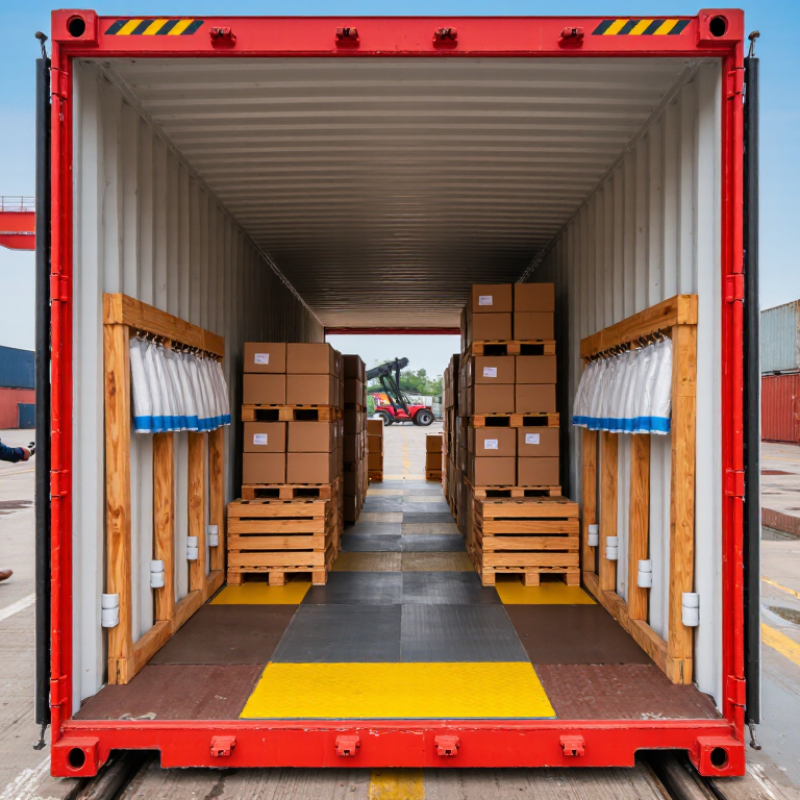
Container packing improves when cargo dimensions are mapped against ISO 668 capacity before booking. A 20-foot container offers about 33 m³, while a 40-foot unit provides roughly 67 m³. These figures are planning references, not guaranteed loading space. Wall contours, door openings, pallets, and protective gaps reduce usable volume. Write down each carton’s length, width, height, and gross weight. Measure twice.
During a recent dry-goods plan, I grouped cartons by footprint before stacking them. That simple change reduced empty corners and kept heavier cases near the floor. However, my first estimate was too optimistic. I ignored carton bulging and the clearance needed for safe handling. For a 20-foot container, I now reserve a practical allowance below 33 m³. For a 40-foot container, the same discipline applies below 67 m³. The exact allowance depends on packaging, loading equipment, and cargo stability.
Use a loading sheet with calculated volume, stack limits, weight distribution, and access requirements. Do not fill every cubic metre if the load becomes difficult to secure. A small unused space can prevent crushed cartons and shifting cargo. Check the final arrangement against actual container dimensions, not only software results. Software helps. Photograph the completed load and record deviations for the next shipment. Record what went wrong.
How to Improve Container Packing for Global Shipping?
Map planned cargo volume to ISO 668 container capacity before loading. Allowing approximately 15% for irregular shapes, aisle space, dunnage, and packing gaps provides a more practical loading target.
Planning guide: A standard 20-foot container provides approximately 33 m³ of internal volume, while a standard 40-foot container provides approximately 67 m³. For more reliable packing, target about 28 m³ and 57 m³ respectively, subject to cargo dimensions, weight limits, and loading regulations.
Calculate Cube, Weight, and Verified Gross Mass Under SOLAS VGM Rules
How to Improve Container Packing for Global Shipping?
Accurate packing starts with three figures: cube, cargo weight, and verified gross mass. Measure each package’s length, width, and height in meters. Multiply these dimensions by the package quantity. For example, 480 cartons measuring 0.40 by 0.30 by 0.25 meters occupy 14.4 cubic meters. Leave room for dunnage, airflow, and safe handling. Do not fill every empty corner automatically. Uneven pressure can damage cartons and complicate unloading. Weight each product batch separately. Then check the combined load against the container’s permitted payload and floor limits.
Under SOLAS VGM rules, VGM includes cargo, packaging, pallets, blocking, and securing materials. It also includes the container’s tare weight. One accepted method weighs the fully packed container. Another adds all cargo and packaging weights, then adds the tare weight. For example, 4,320 kilograms of cargo, 180 kilograms of packaging, 60 kilograms of dunnage, and a 2,300-kilogram tare produce a VGM of 6,860 kilograms. Use calibrated scales and retain weight records. Submit the verified figure before the carrier’s loading deadline. Small errors become expensive. In practice, teams sometimes copy old tare data or estimate wood weight. That shortcut deserves review. Moisture, replacement pallets, and damaged packaging can change the result. A second-person check is worthwhile before the container is sealed.
How to Improve Container Packing for Global Shipping? — Calculate Cube, Weight, and Verified Gross Mass Under SOLAS VGM Rules
| Load Plan |
Container Type |
Packages / Pallets |
Internal Cube
(m³) |
Planned Cargo Cube
(m³) |
Cube Utilization |
Cargo Mass
(kg) |
Packaging Mass
(kg) |
Securing Materials
(kg) |
Container Tare
(kg) |
Verified Gross Mass
(kg) |
Payload Headroom
(kg) |
SOLAS VGM Status |
| Plan A |
20-foot dry container |
10 pallets |
33.2 |
27.6 |
83.1% |
8,400 |
420 |
80 |
2,300 |
11,200 |
17,000 |
Ready for declaration |
| Plan B |
40-foot standard container |
20 pallets |
67.7 |
58.0 |
85.7% |
16,800 |
840 |
160 |
3,750 |
21,550 |
5,180 |
Ready for declaration |
| Plan C |
40-foot high-cube container |
22 pallets |
76.3 |
63.5 |
83.2% |
19,200 |
960 |
180 |
3,900 |
24,240 |
4,360 |
Ready for declaration |
| Plan D |
40-foot high-cube container |
25 pallets |
76.3 |
64.8 |
84.9% |
18,500 |
925 |
175 |
3,800 |
23,400 |
5,200 |
Ready for declaration |
| Planning Summary |
— |
213.9 |
84.2% average |
62,900 |
3,145 |
595 |
13,750 |
80,390 |
31,740 |
All plans within planning limits |
|
VGM calculation:
Verified Gross Mass = cargo mass + packaging mass + securing materials + container tare.
The shipper is responsible for providing the signed VGM to the carrier or terminal before the vessel loading deadline.
Under SOLAS VGM requirements, a packed container without a valid VGM should not be loaded.
|
|
Packing guidance:
Cube utilization is calculated as planned cargo cube ÷ reference internal container cube.
Container dimensions, tare weight, payload rating, and terminal cut-off requirements must be confirmed from the actual container and shipping instructions.
Weights should be measured using a calibrated scale or calculated from verified component weights in accordance with the applicable VGM method.
|
Optimize Pallet Patterns to Increase Usable Container Space
Better container packing often begins with the pallet pattern, not the container itself. A few centimeters repeated across several pallets can waste valuable cubic space. Measure pallet length, width, height, and load overhang before choosing a layout. Then compare straight rows with brick-style arrangements. Brick patterns can reduce voids. However, they may complicate unloading and create uneven pressure near pallet edges. Use the pattern that fits the product, handling equipment, and required access.
For mixed cartons, place large, stable cases below smaller ones, keeping labels visible. Alternate carton direction between layers when the package allows it. This improves interlocking and limits shifting during vibration, braking, and port handling. Do not chase maximum fill blindly. A tightly packed pallet can crush corner boxes or block airflow around sensitive goods. Leave controlled gaps where restraints, inspection, or ventilation require them. Record the final pattern with a simple top-view sketch and pallet photos. That record helps warehouse teams repeat successful loads.
In practical trials, calculate usable volume after wrapping, corner protection, and securing materials. These small additions often change the best pattern. Check axle limits, container payload limits, and current transport documents before loading. Load heavier pallets low and near the center when the distribution plan permits. An efficient pattern is not always the safest one. Test one revised layout on a real shipment, inspect damage, and adjust the next load. Paper efficiency can mislead.
Load Heavy Goods Low and Distribute Weight for Stable Center of Gravity
How to Improve Container Packing for Global Shipping?
Stable container packing begins with the center of gravity. Place dense cargo on the floor, near the container’s longitudinal centerline. Keep lighter cartons above it. This lowers the center of gravity and reduces tipping forces during braking, lifting, and rough seas. The IMO’s Verified Gross Mass requirement under SOLAS makes accurate weighing essential before loading. UNCTAD’s Review of Maritime Transport reports that over 80% of global merchandise trade by volume moves by sea, so a small loading error can travel across several handling stages. In practice, I still see teams stacking heavy machinery against one door. It saves minutes, but creates an unstable load.
Weight must also be distributed from left to right. Uneven loading can increase stress on the container floor, twist the structure, and affect vehicle axle limits. Follow the IMO/ILO/UNECE Code of Practice for Packing of Cargo Transport Units, especially its guidance on securing, blocking, and bracing. Use timber dunnage, friction mats, and rated lashings when gaps remain. Heavy items should not rest directly against weak carton walls. Check the floor rating, cargo dimensions, and securing points before loading.
Tips: Weigh each item. Mark the heaviest pieces. Draw a simple load map. Keep the centerline balanced. Recheck the VGM after changes. Leave no hidden voids. Photograph the final restraint system. No plan is perfect; review damaged packaging and shifted cargo after every voyage.
Secure Cargo According to the CTU Code and ISO 1496 Requirements
How to Improve Container Packing for Global Shipping?
Secure cargo according to the CTU Code and ISO 1496 requirements. The CTU Code recommends a documented packing plan before loading begins. Record the cargo weight, center of gravity, friction conditions, and expected transport forces. Heavy cartons should sit low and near the container’s center. Do not rely on door pressure. Use suitable blocking, bracing, dunnage, and lashings to prevent movement in six directions.
ISO 1496-1 sets structural performance requirements for freight containers, including floors, walls, end frames, and stacking loads. It does not make poor packing safe. Inspect the container for damaged corner fittings, holes, wet floors, or distorted doors. A simple test helps: push the first cargo row by hand. If it shifts, ocean motion will expose the weakness. Leave no empty gaps without proper void-filling material.
The World Shipping Council’s Containers Lost at Sea report recorded 576 containers lost in 2023. That figure is small beside the roughly 250 million containers transported annually, but each loss can disrupt several supply chains. The CTU Code also stresses securing cargo for road, rail, and sea conditions, not only the vessel voyage. In practice, teams often underestimate vibration and braking forces. That mistake deserves review. Take photographs before closing the doors, verify the seal number, and retain the packing checklist. Better documentation cannot correct bad loading, but it can reveal where judgment failed.